
LEGO House
UX audit and strategic recommendations for LEGO House's pre and post visit digital experience across all customer touchpoints.
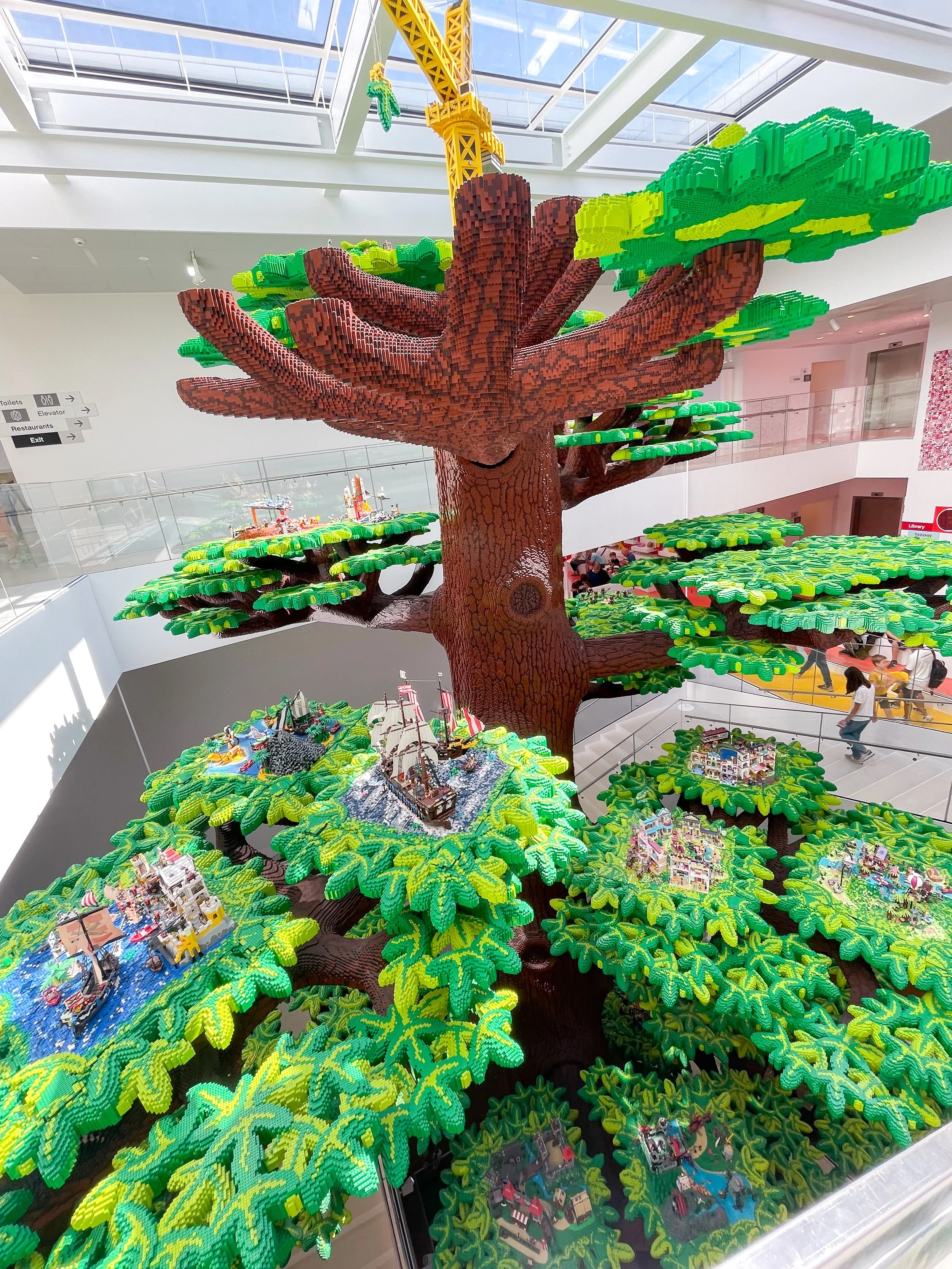
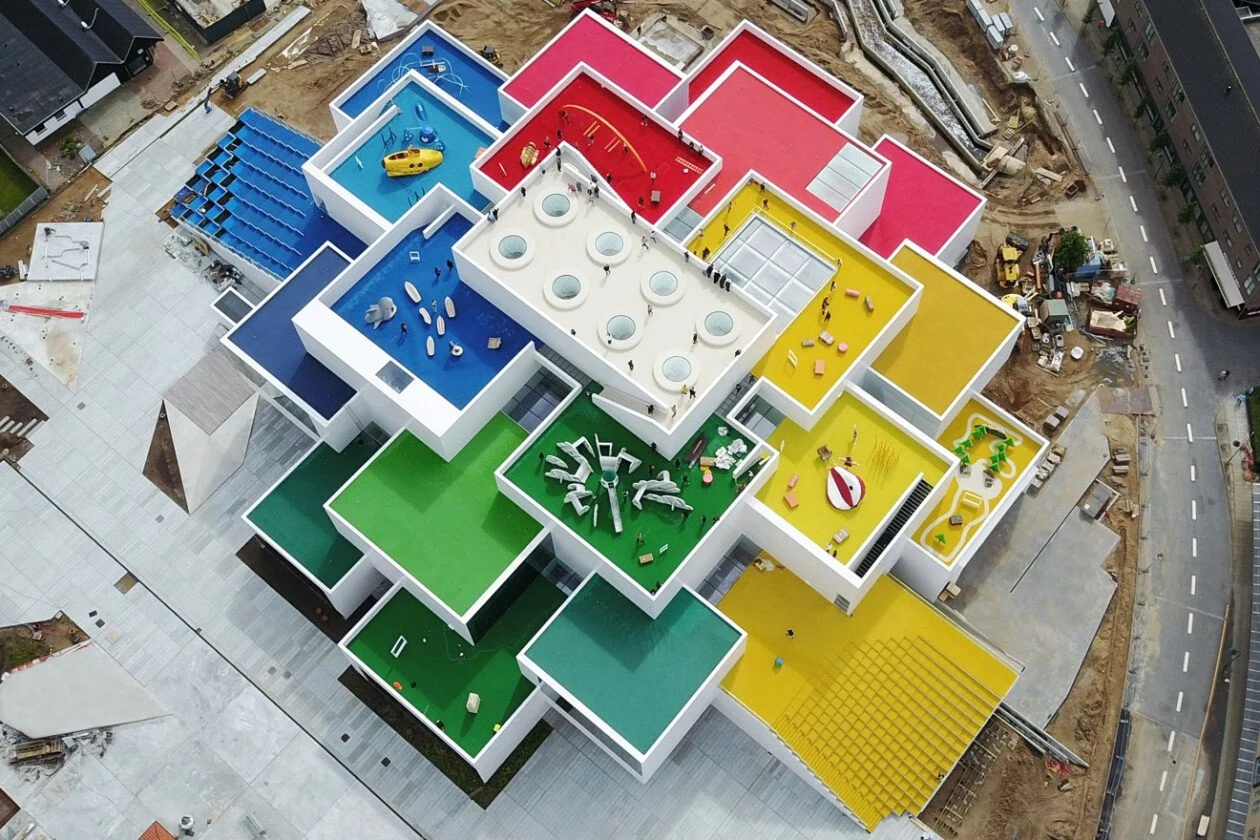
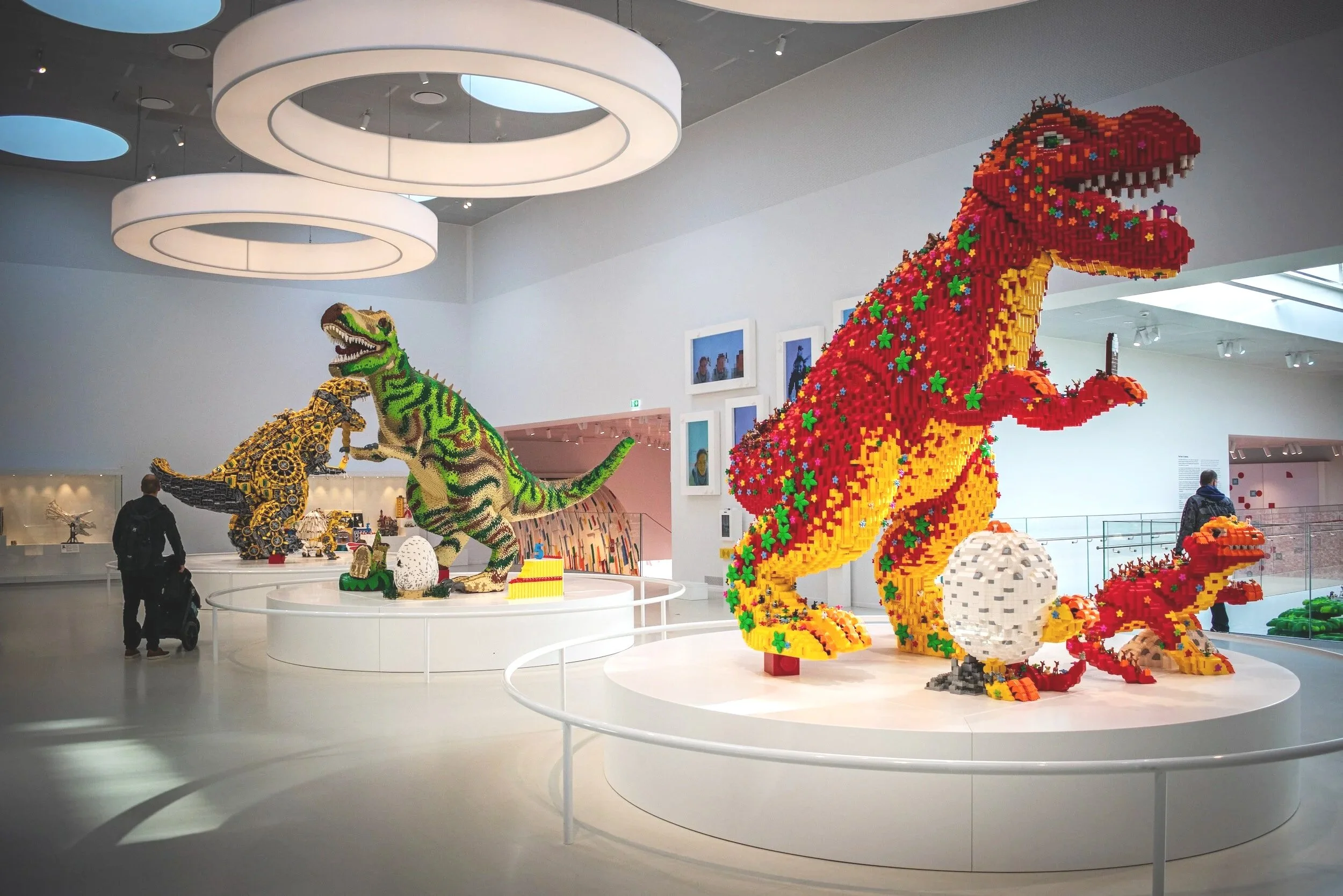
The LEGO House experience is unlike any other. The digital experience around it hadn't caught up.
As a pioneer in the Experience Economy, LEGO House recognizes that to fully actualize its vision as a lighthouse destination, it must creatively redefine and enhance the visitor experience through the lens of a digital revolution.
We conducted a heuristic assessment of the LEGO House digital experience, both prior to and following visitors' in-person experiences, to reveal enhancement solutions to the visitor experience..
Team and Expertise
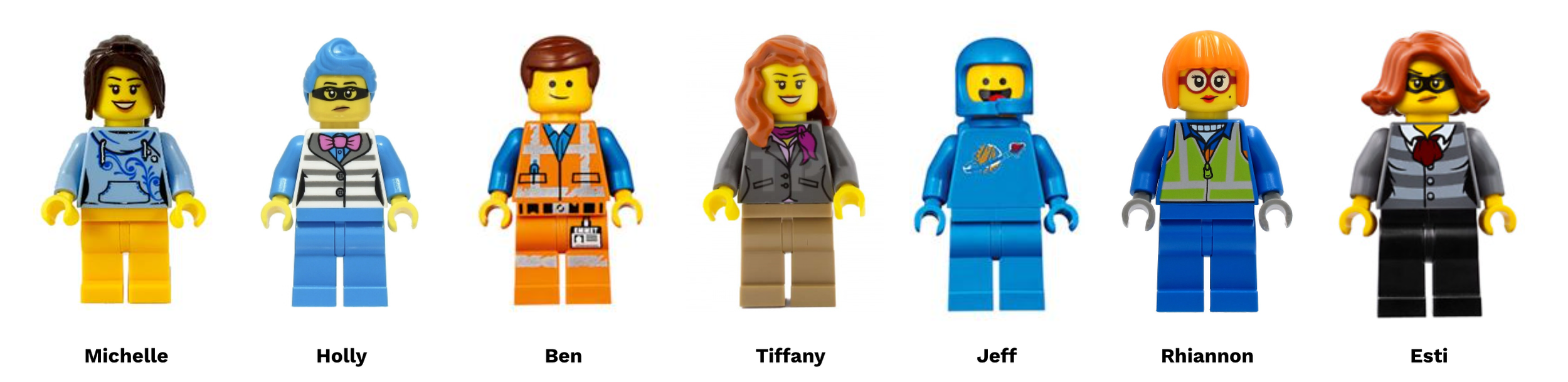
Michelle Product Design
Holly Strategy and Innovation
Ben Content Strategy
Tiffany Heuristic Volunteer
Jeff Heuristic Volunteer
Rhiannon Product Manager
Esti Qualitative Insights
Understanding the Ecosystem
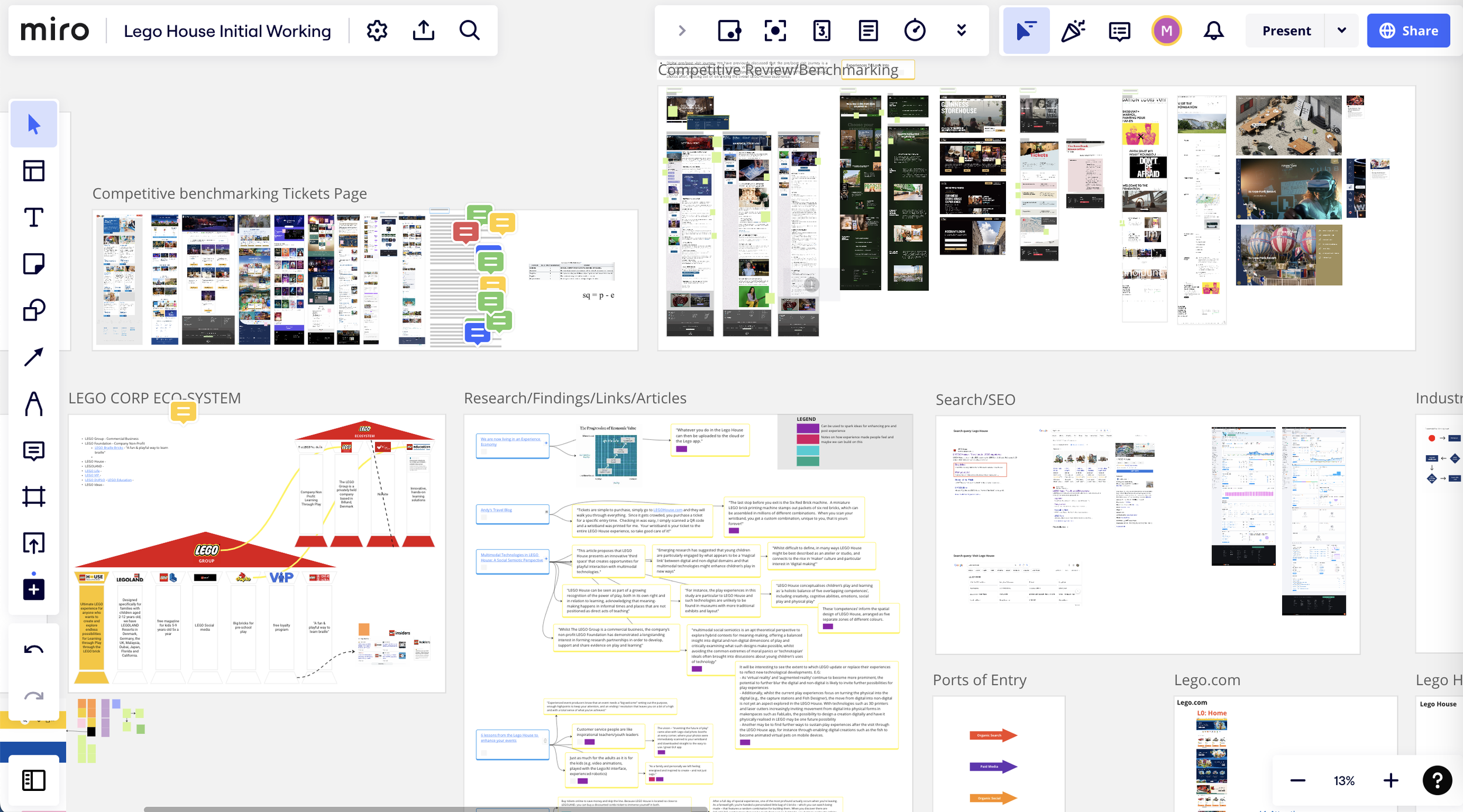
Before evaluating anything, we established Miro as our central research hub and started mapping. We analyzed SEO and site performance, conducted competitive research, reviewed visitor feedback across TripAdvisor, Yelp, and travel blogs, and drew on academic research covering visitor psychology, multi-modal experiences, and the experience economy.
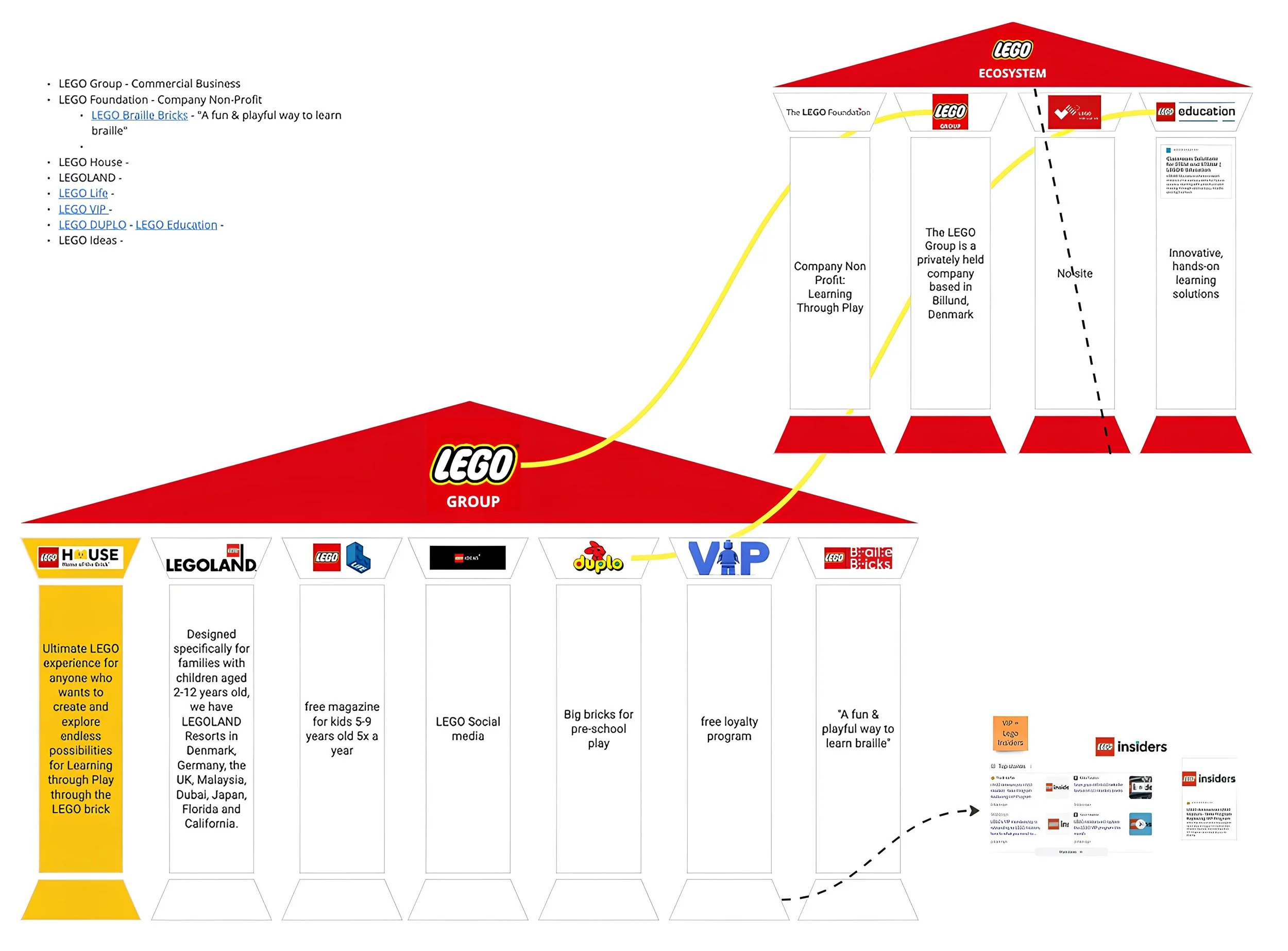
The first thing we needed to understand was where LEGO House actually sits within the broader LEGO corporate structure. LEGO House is one piece of a much larger ecosystem spanning LEGO Group, LEGO Foundation, LEGOLAND, LEGO Education, LEGO Ideas, LEGO VIP, and more. Understanding those relationships helped define what the LEGO House digital experience needed to own versus what it could lean on from the broader system.
Defining the Visit Types and Archetypes
Not everyone comes to LEGO House the same way. We identified three distinct visit types to structure the evaluation around. Basic Pre-Visit covered how visitors navigate ticket booking across mobile and desktop, including the email communications that support the process. Basic Post-Visit followed visitors after their trip, focusing on how they access their Memories and engage with post-visit communications. Exploratory Pre-Visit captured the broader research behaviors of visitors who arrive with questions rather than a transaction in mind: food, lodging, accessibility, school visits, exhibits, and seasonal events.
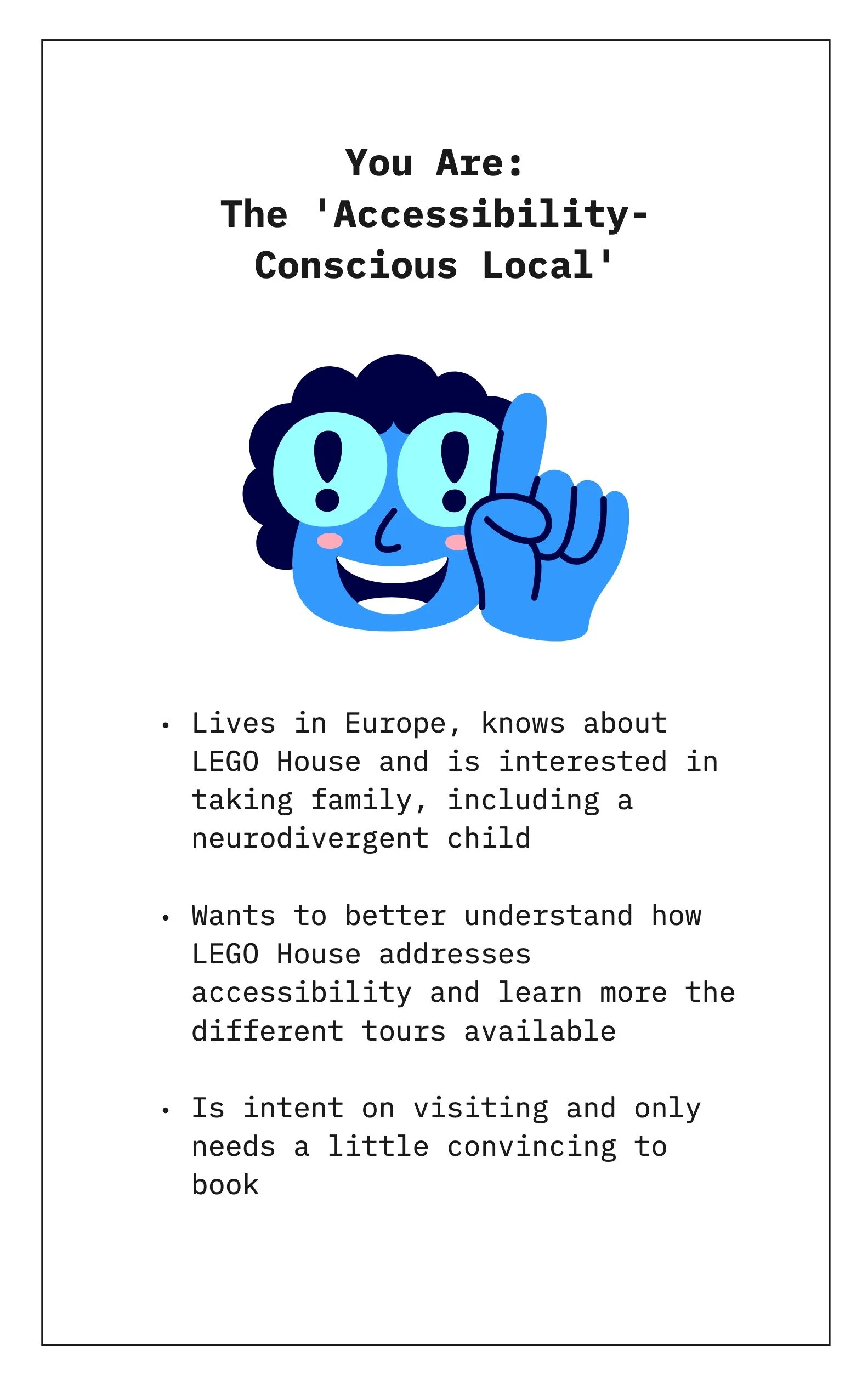
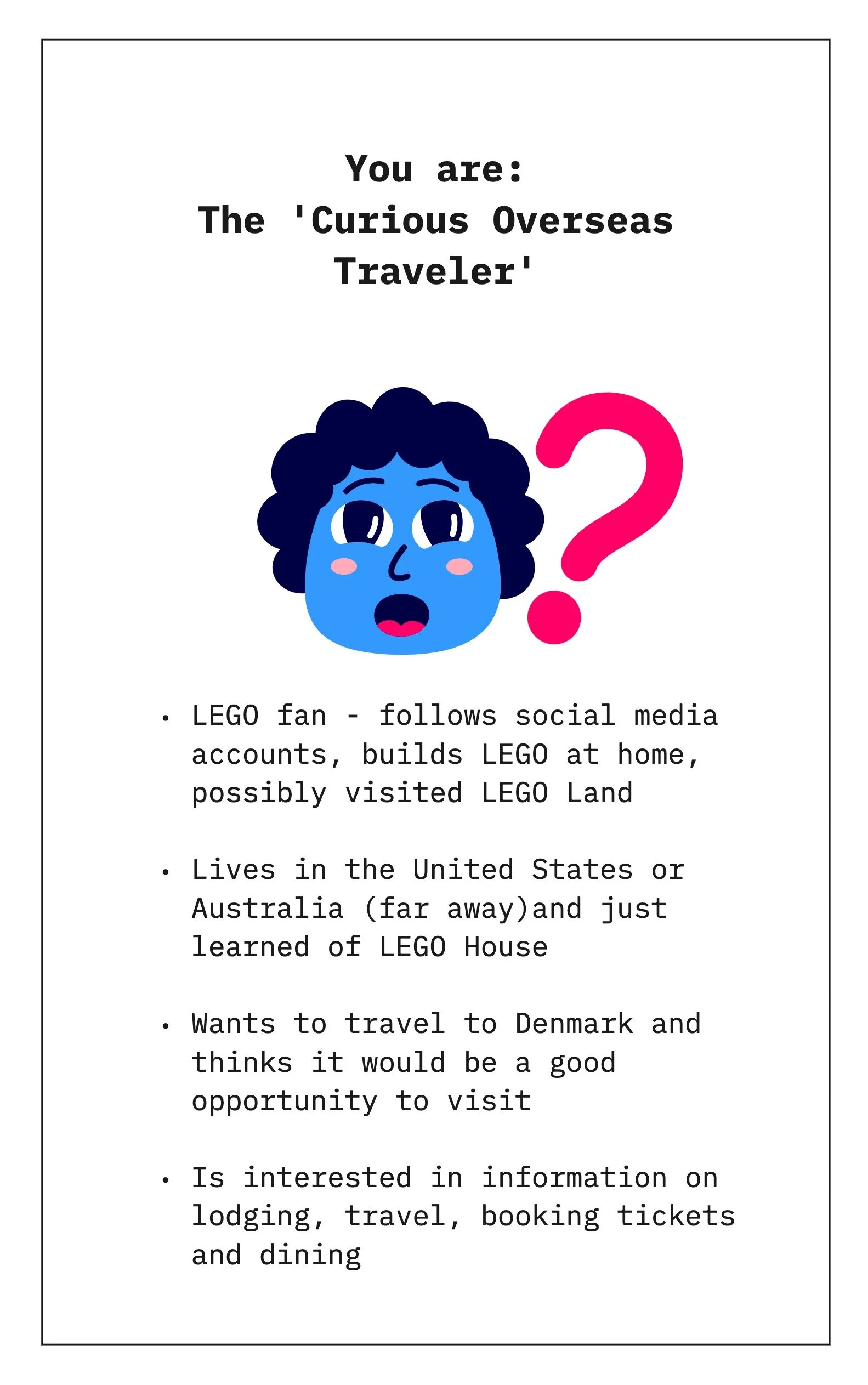
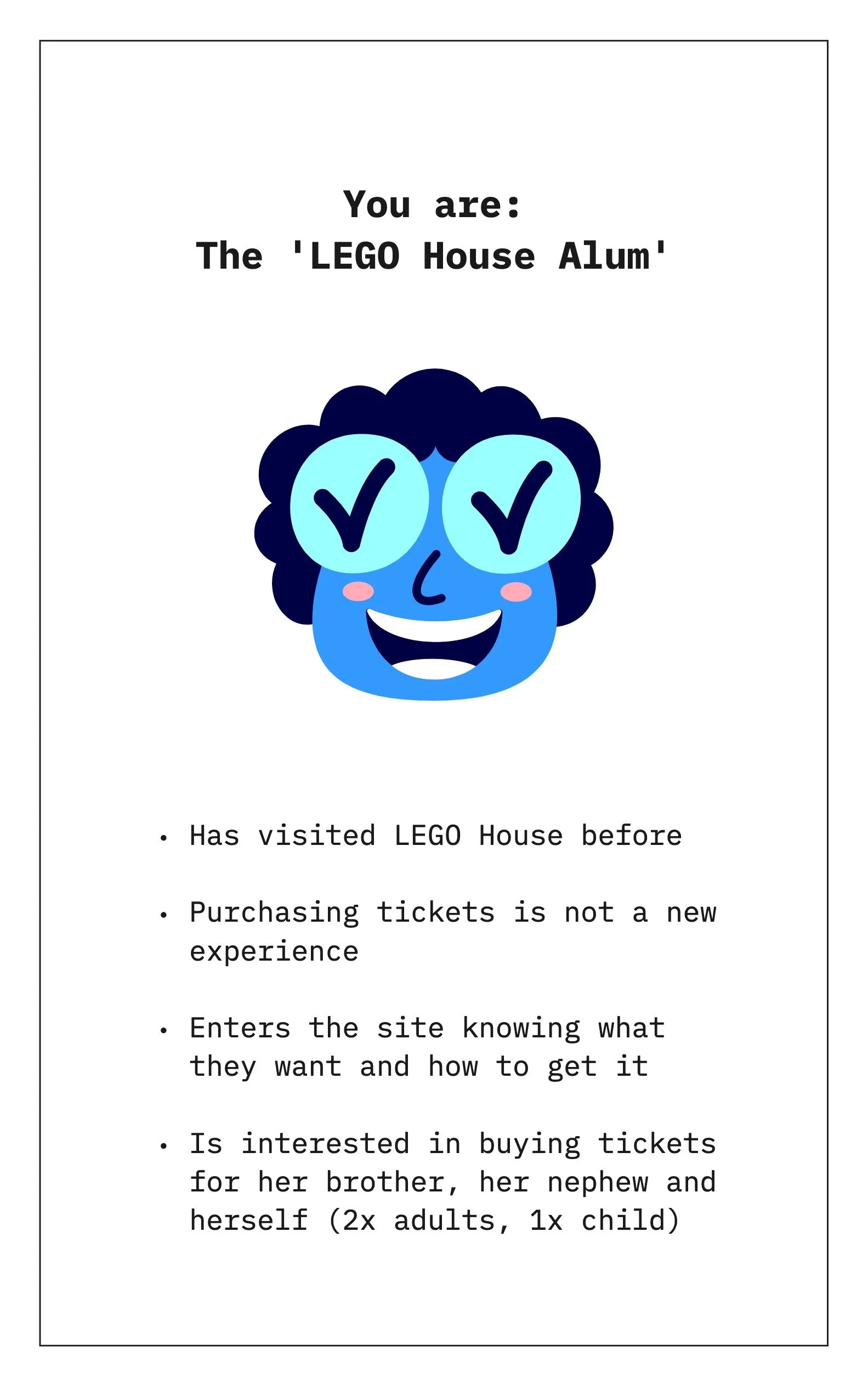
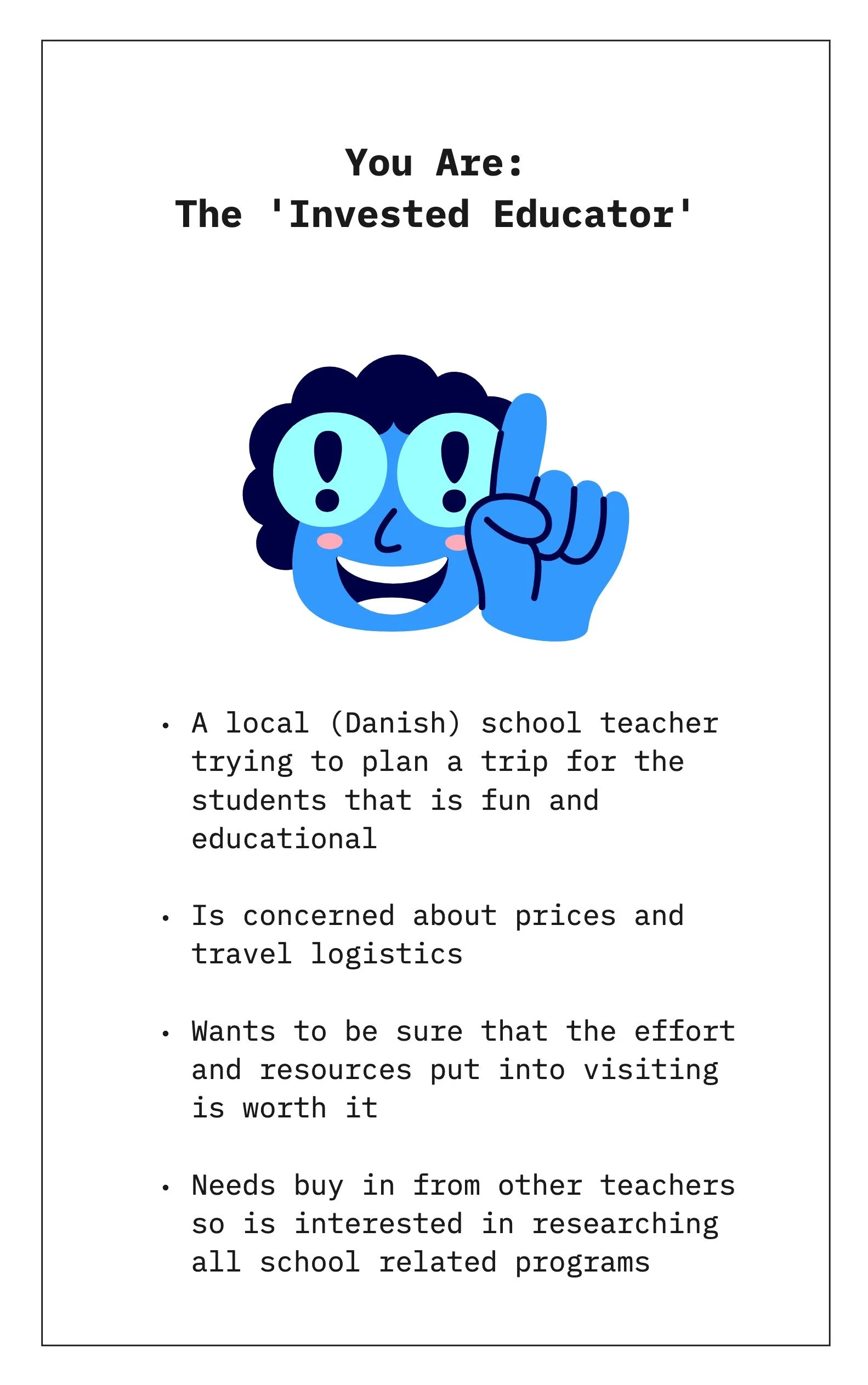
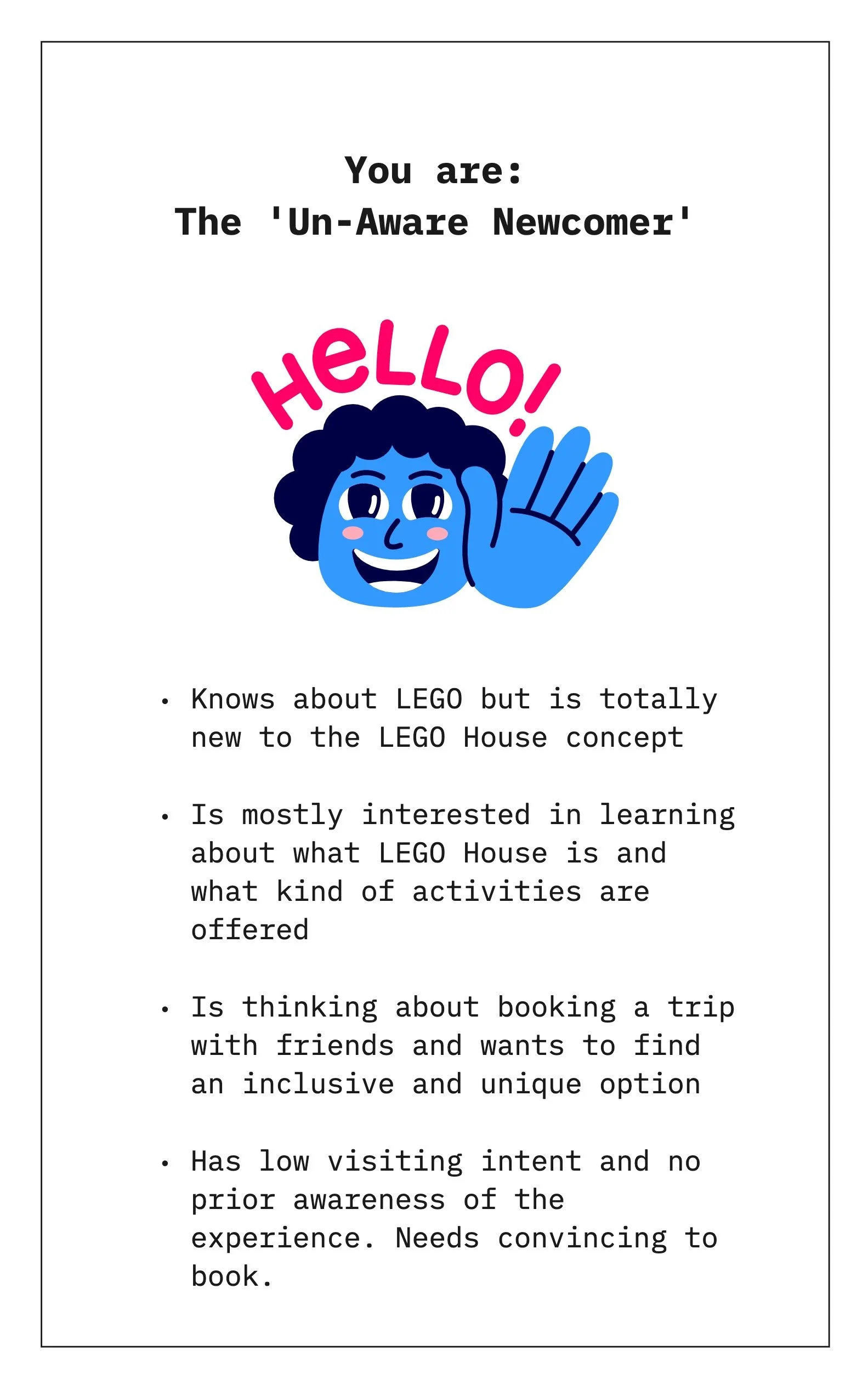
From those visit types we mapped six user journeys and defined five archetypes: the Accessibility Conscious Local, the Curious Overseas Traveler, the LEGO House Alum, the Invested Educator, and the Unaware Newcomer. Each reflected a distinct set of goals and a distinct set of gaps in the existing experience.
Heuristic Evaluation
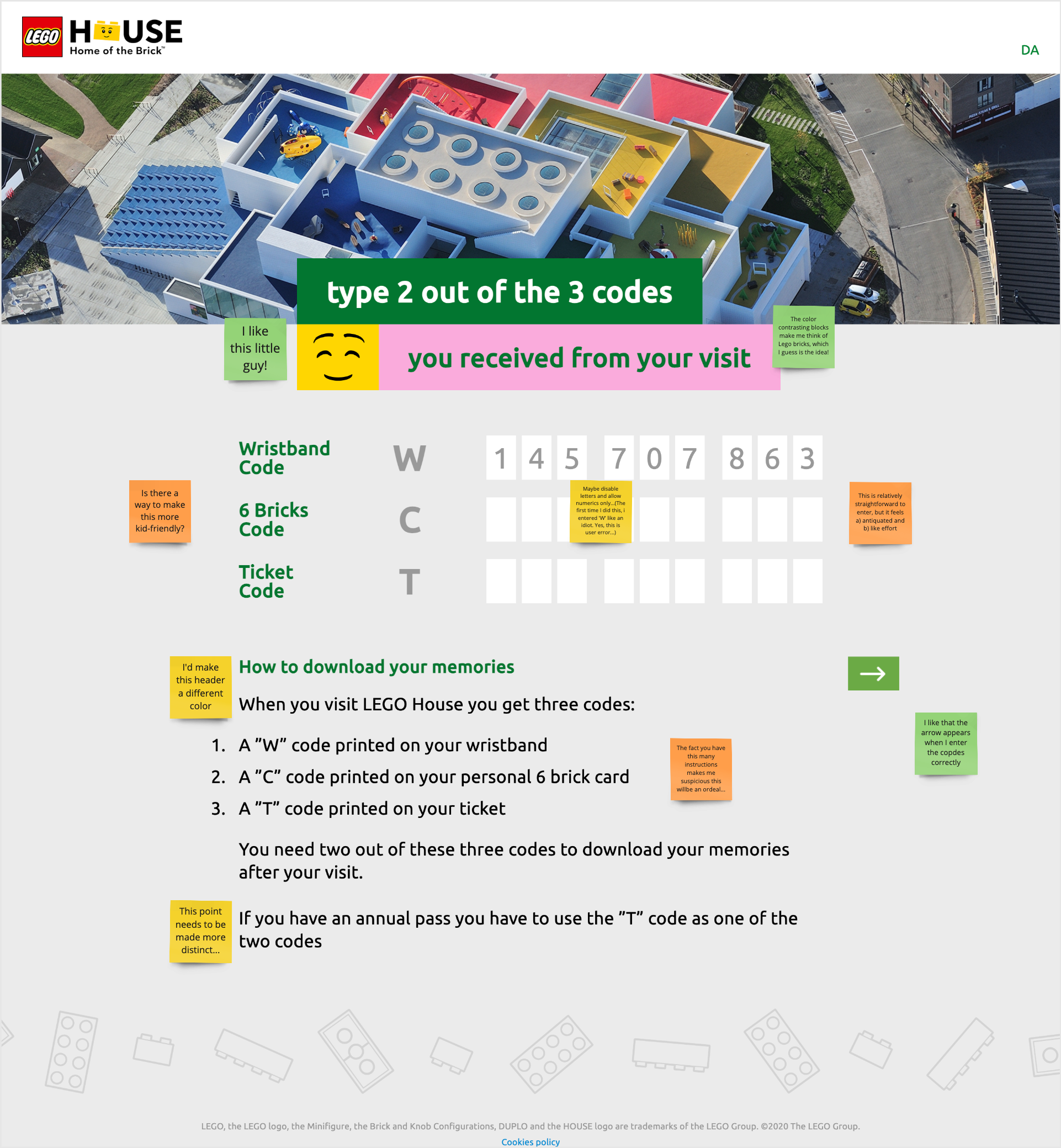
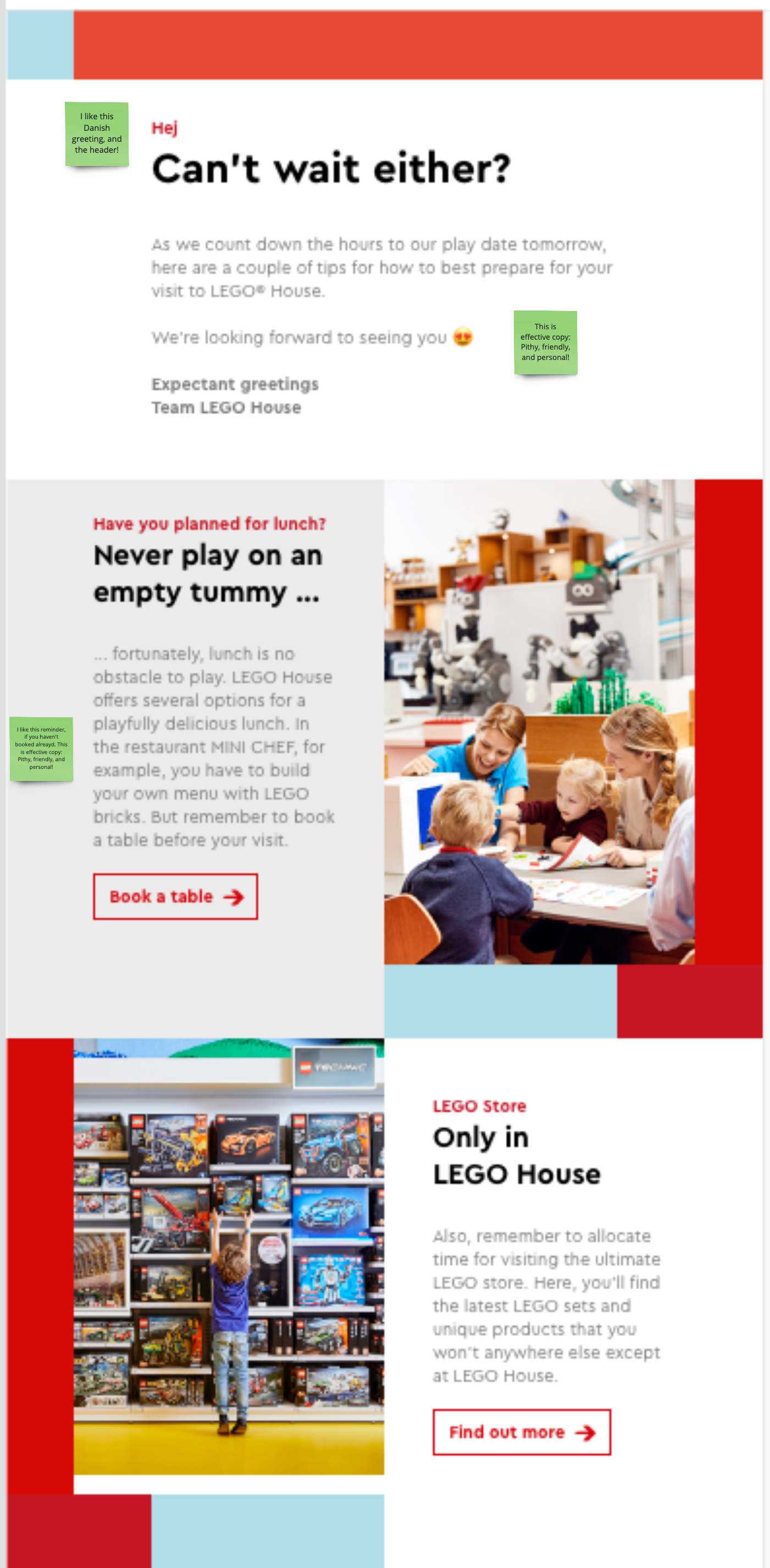
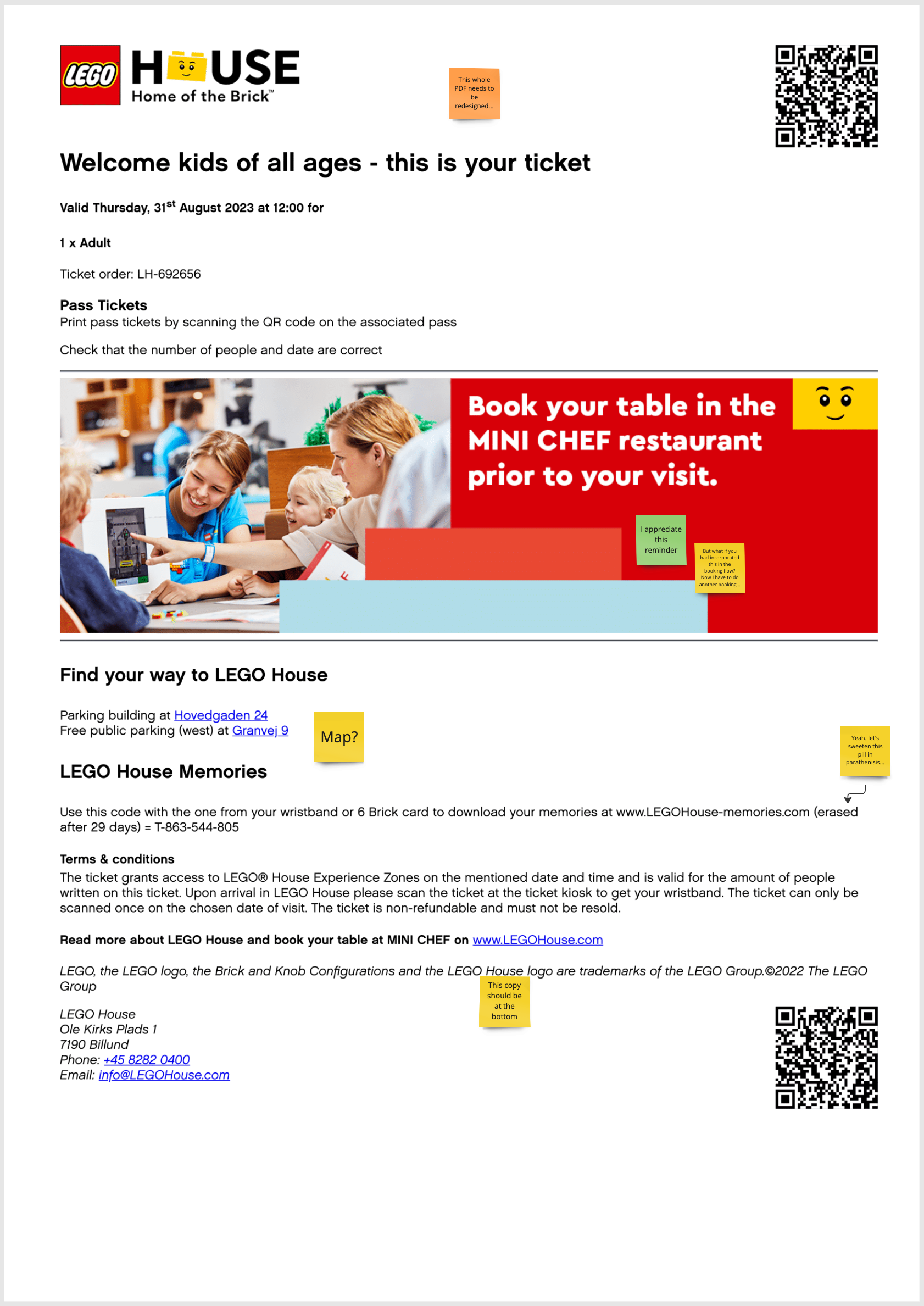
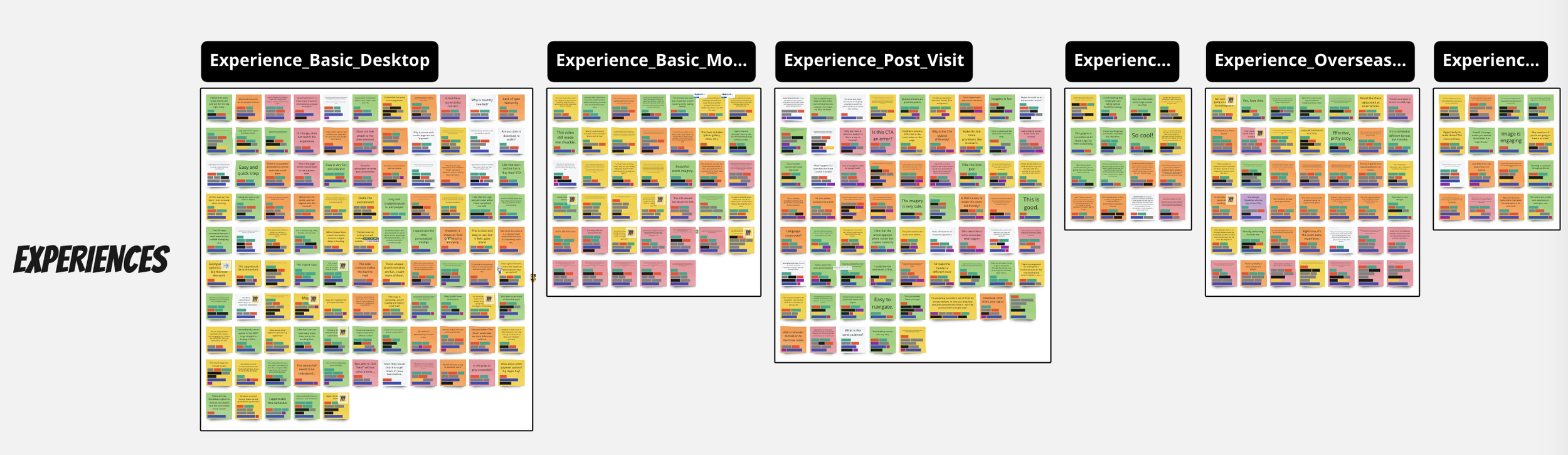
This is where I led. Seven evaluators, including myself, each assessed three journeys: a pre-visit booking experience, a post-visit memories experience, and an exploratory experience.
I ran the onboarding session to walk everyone through the usability heuristics and what we were looking for. Each evaluator received a personalized Miro board with their assigned journeys, detailed instructions, user personas, a heuristics cheat sheet, and pre-coded stickies for capturing observations.

From Raw Data to Insights
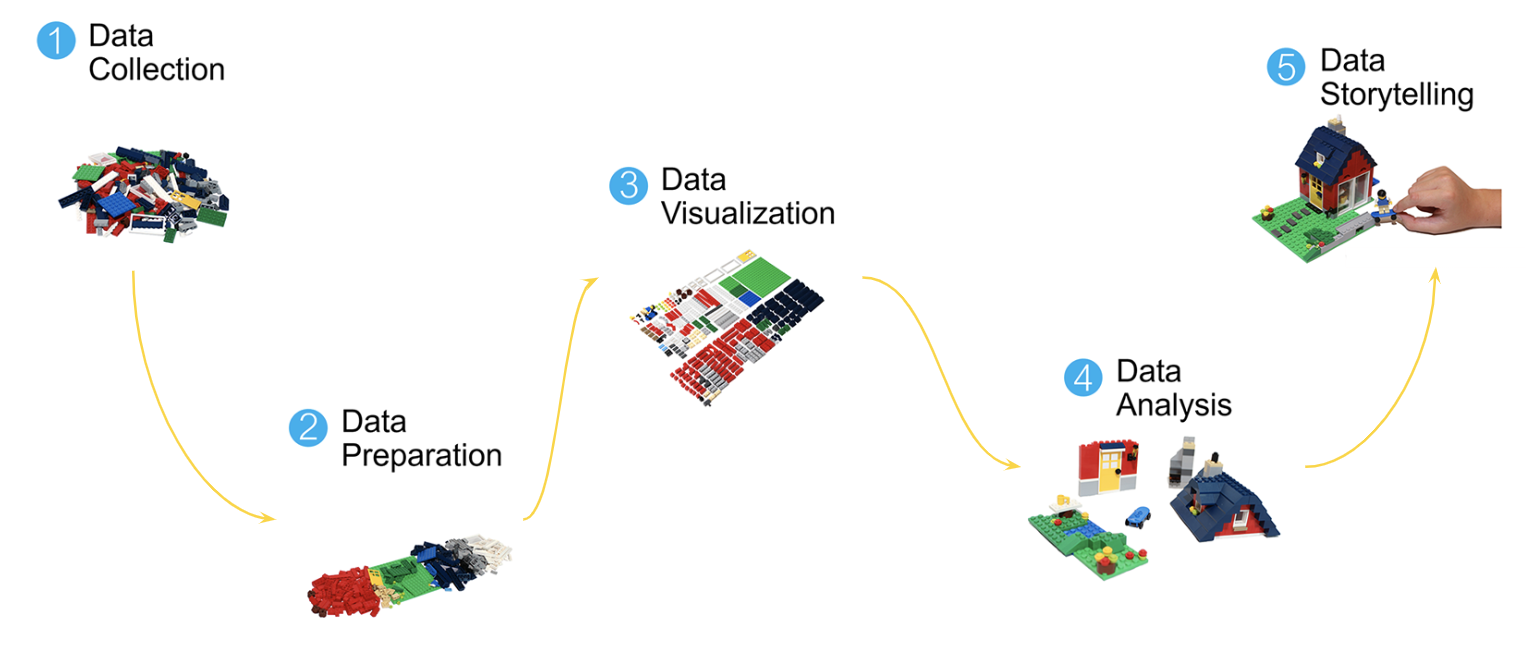
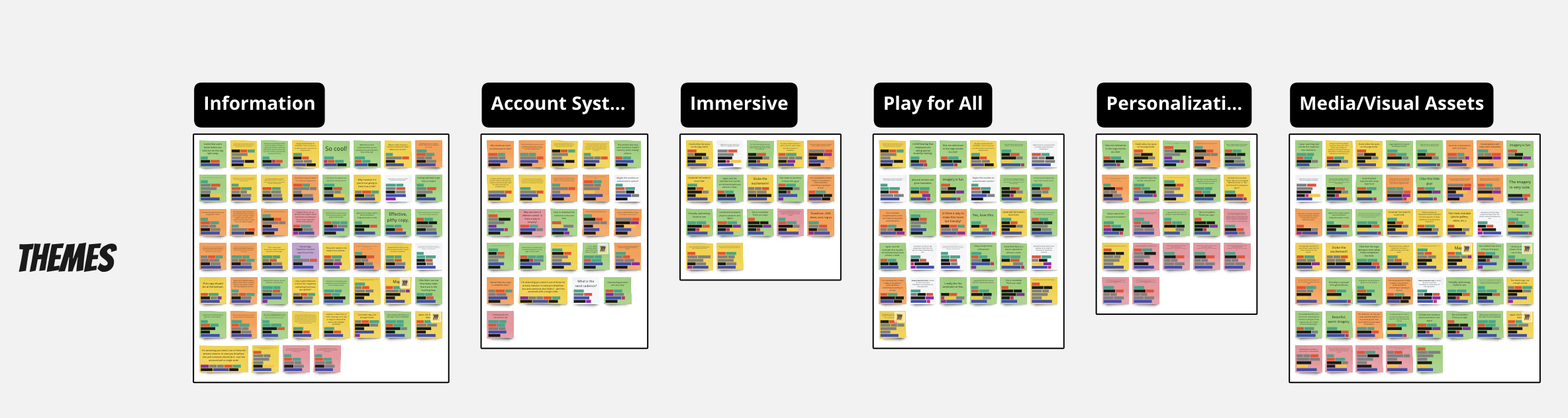
Once evaluators completed their analysis, I collected all raw observations and prepared them for synthesis. We moved through five stages: collection, preparation, visualization, analysis, and storytelling.
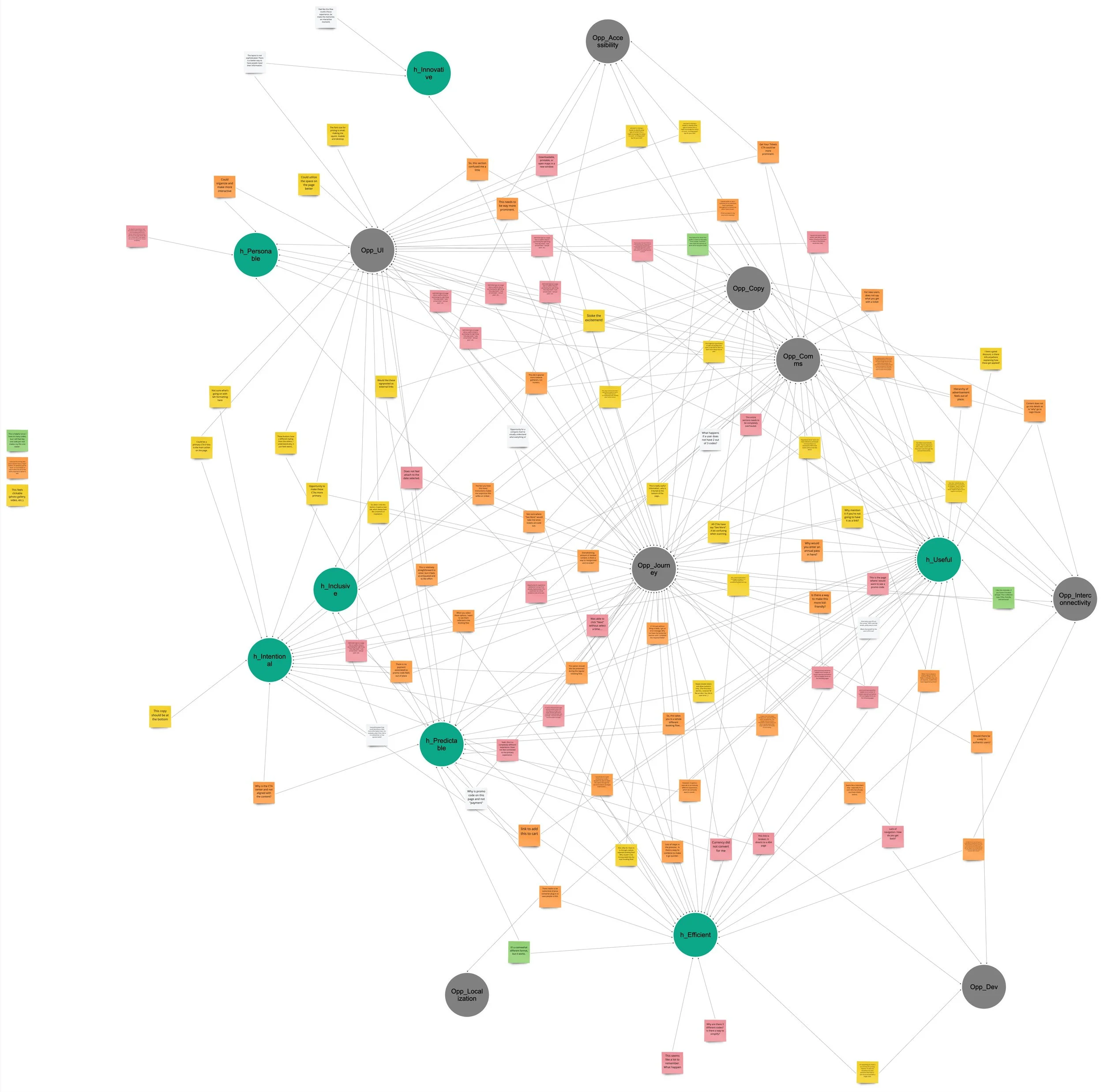
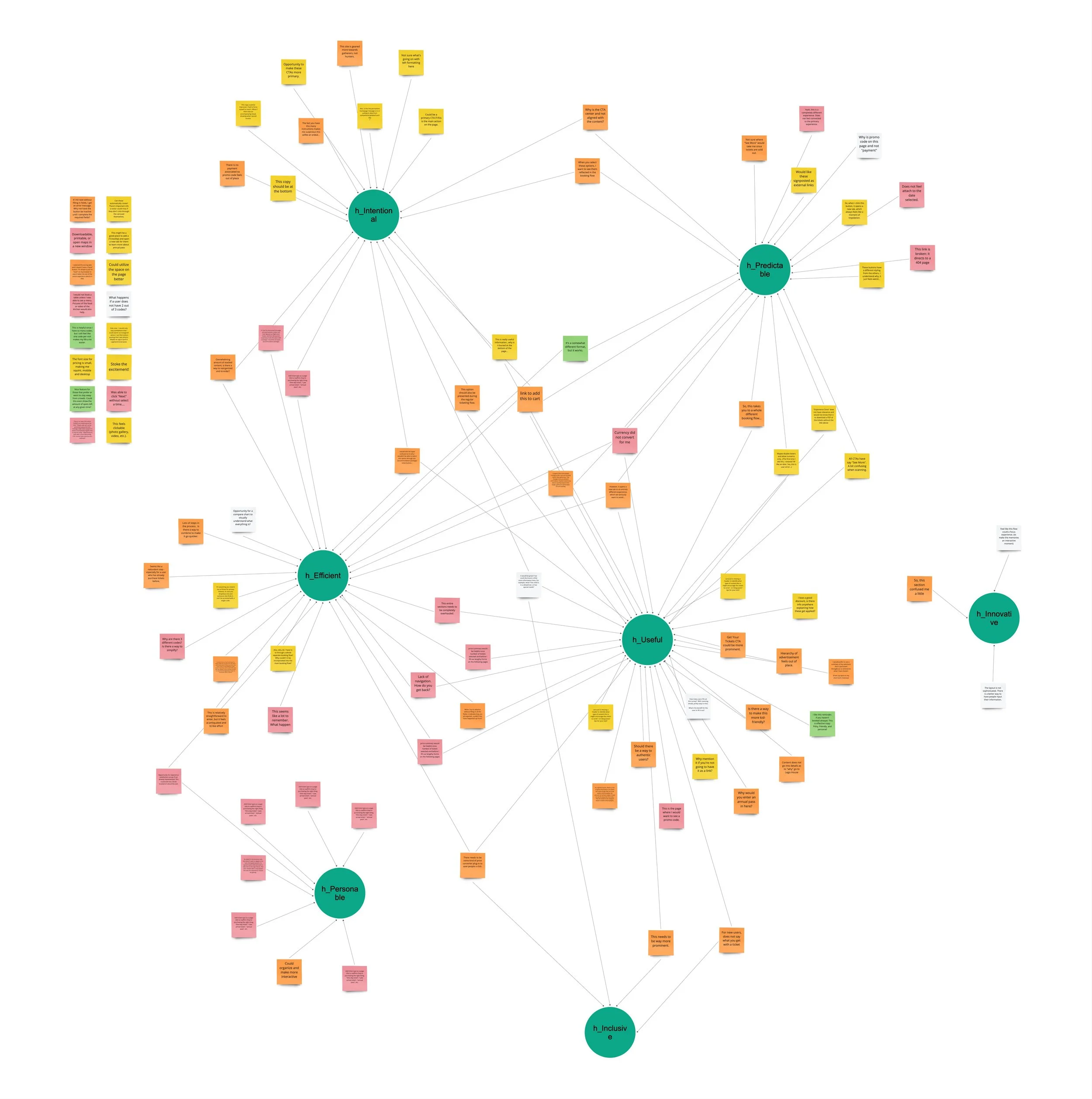
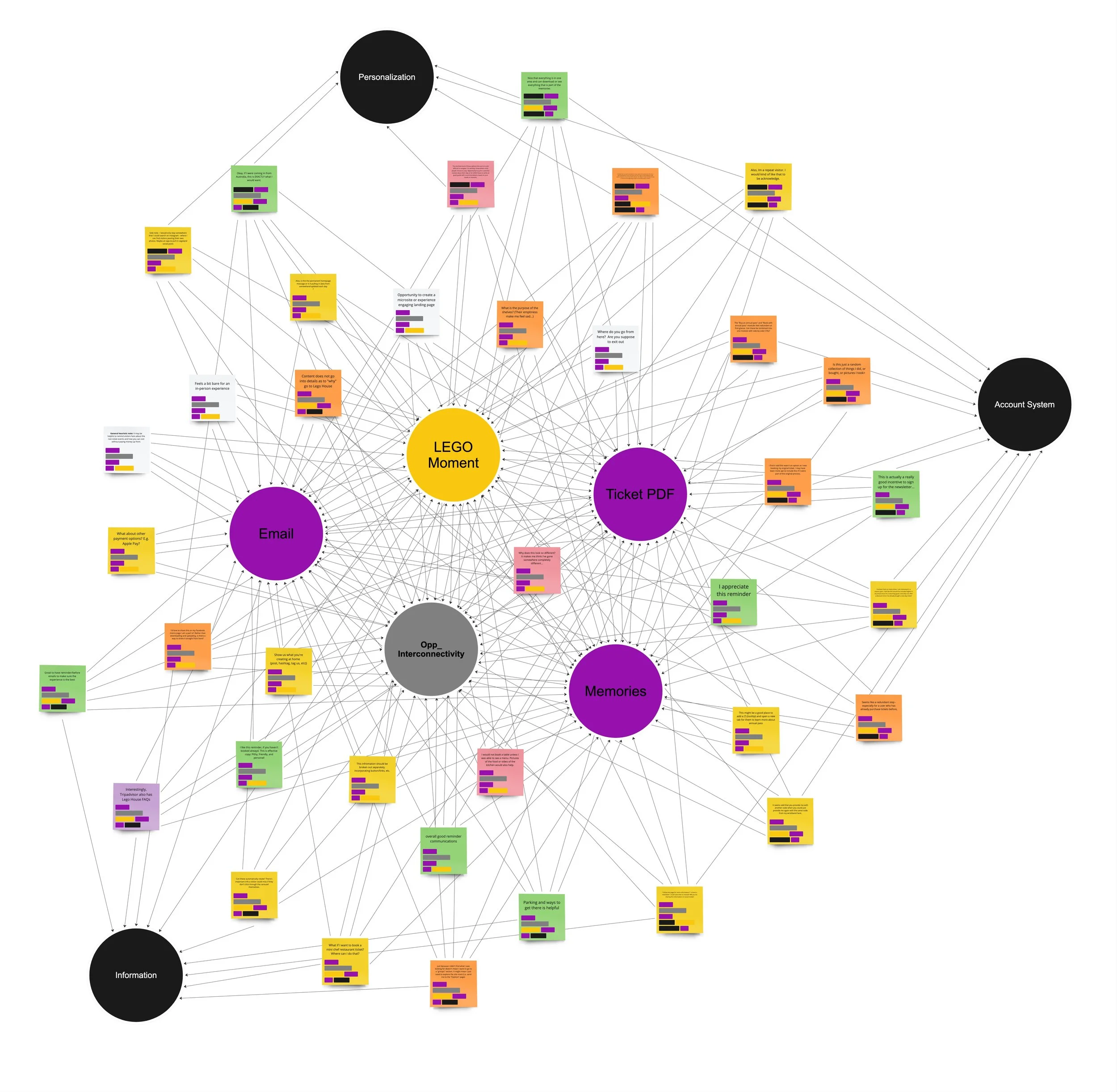
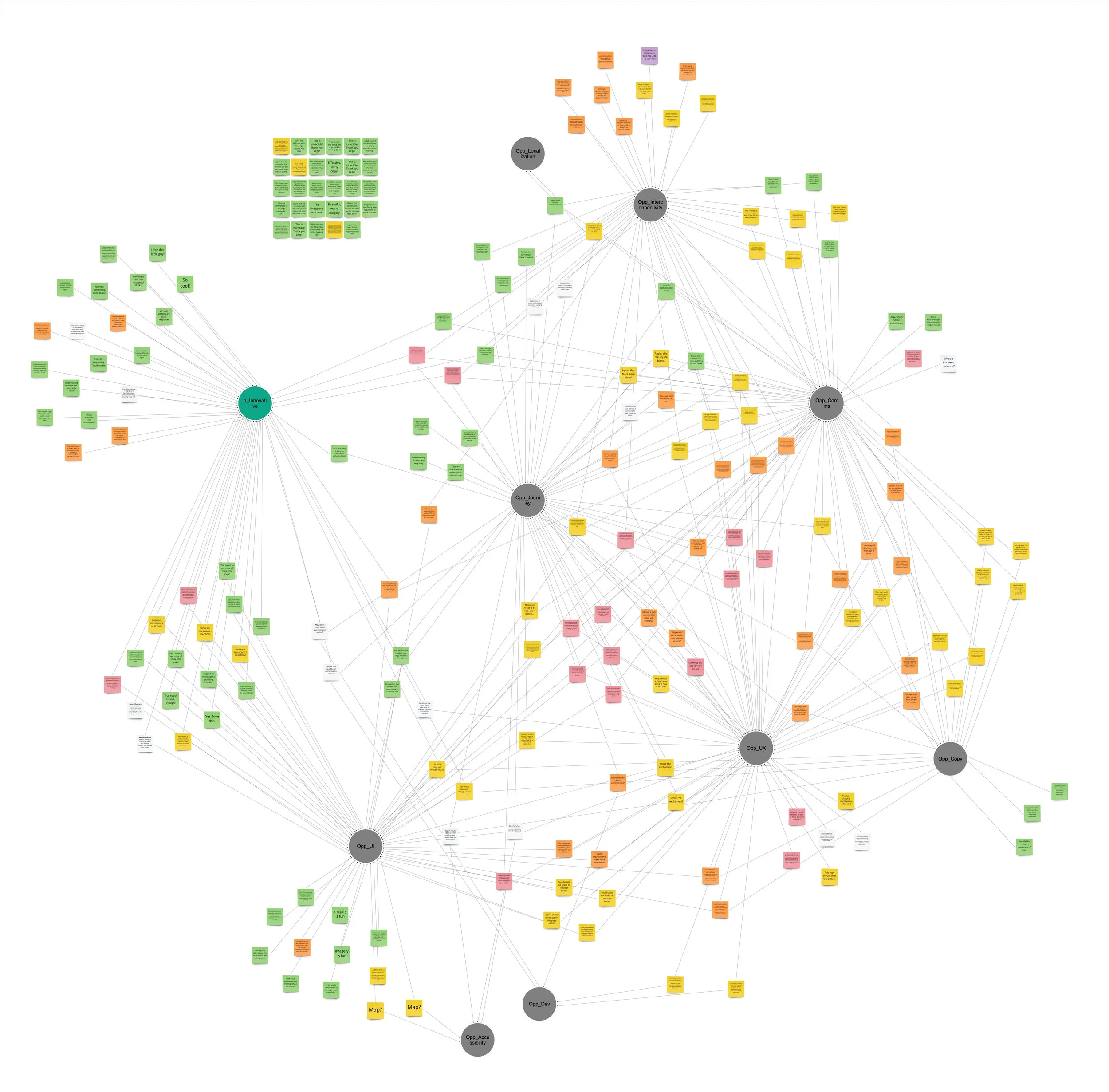
We visualized findings across seven heuristic categories: useful, predictable, personable, efficient, intentional, inclusive, and innovative. Then we cross-referenced themes like personalization and immersive experience against specific touchpoints like emails and the booking flow to find where the gaps were most concentrated.
Data Collection and Preparation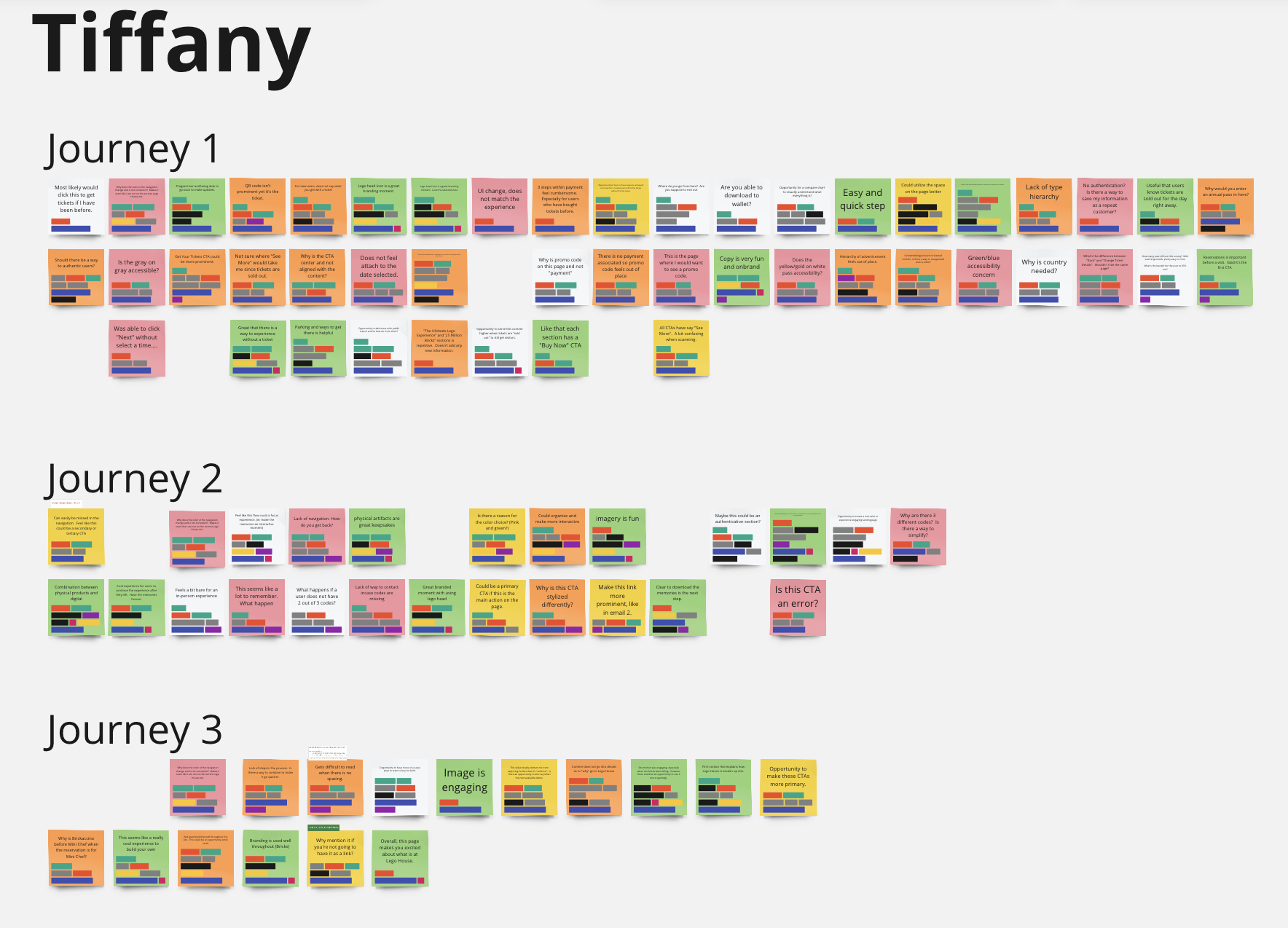
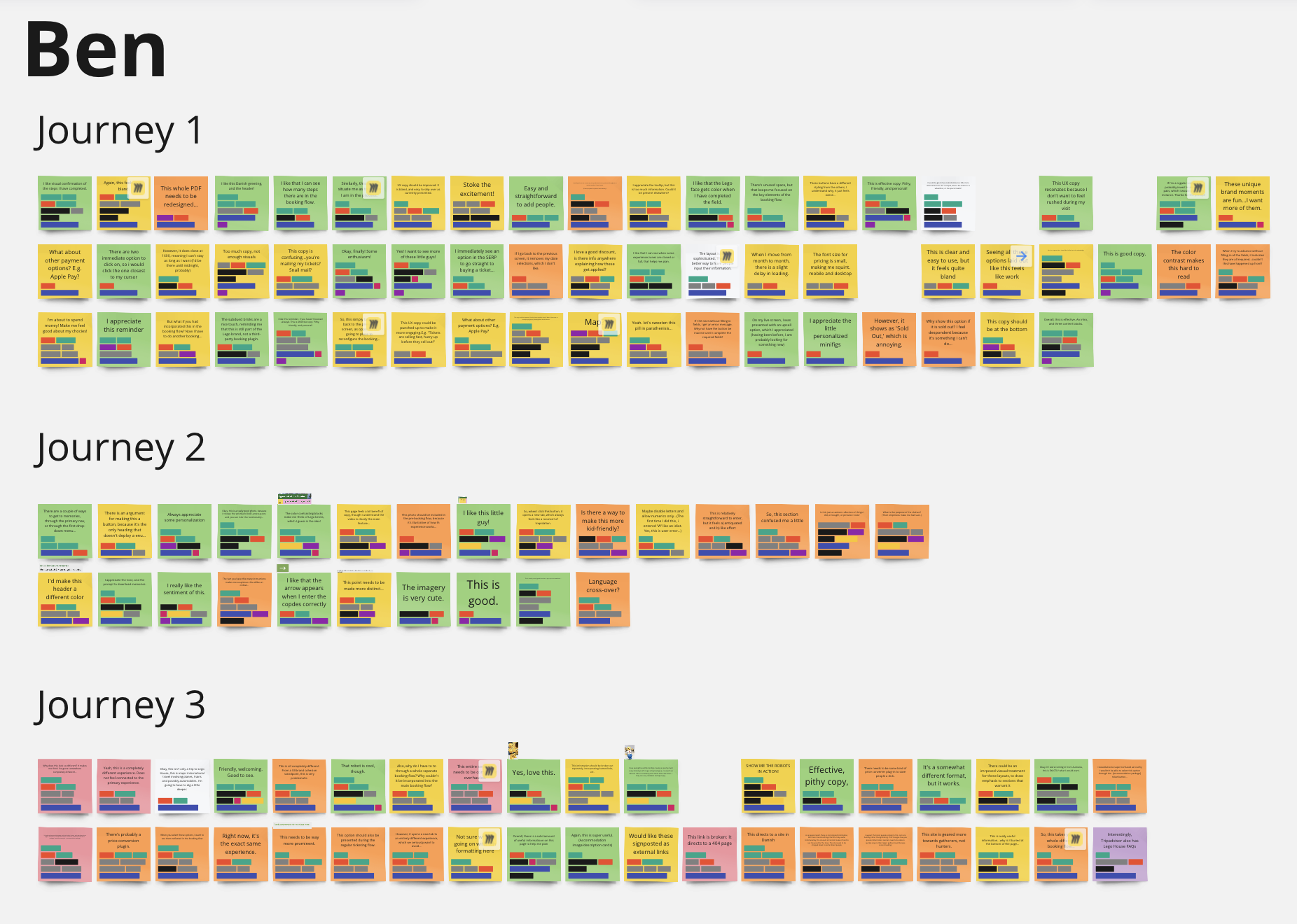
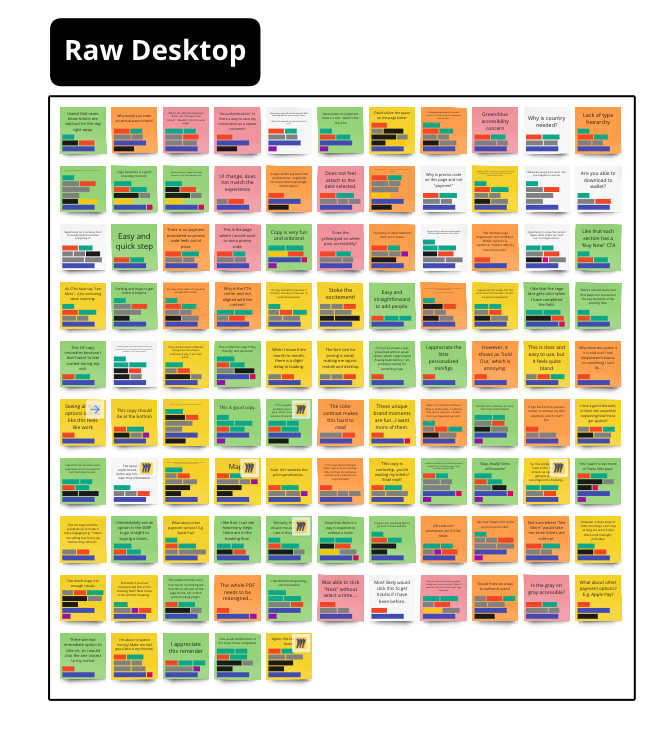
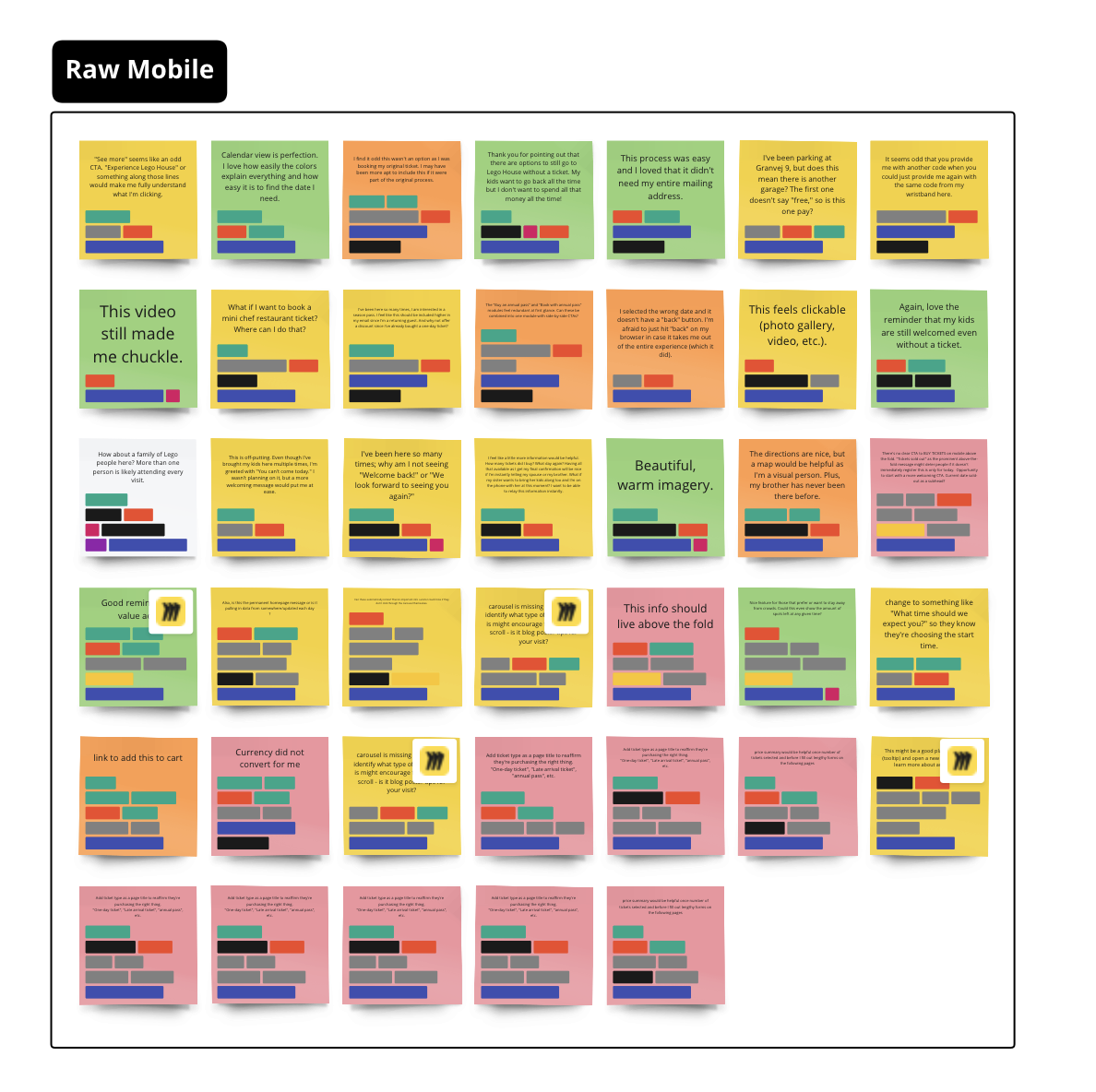
Data Visualization and Analysis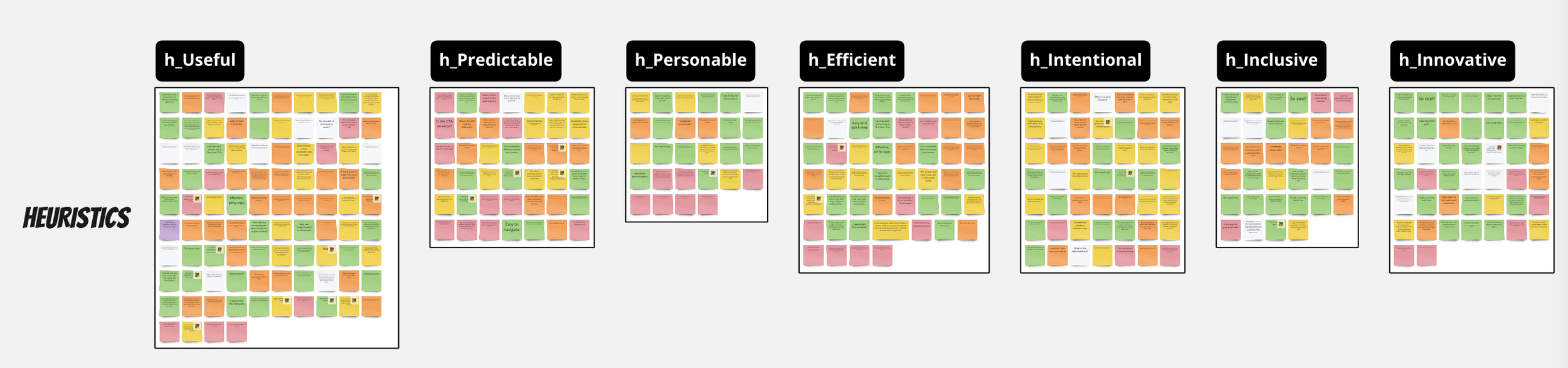


What We Found
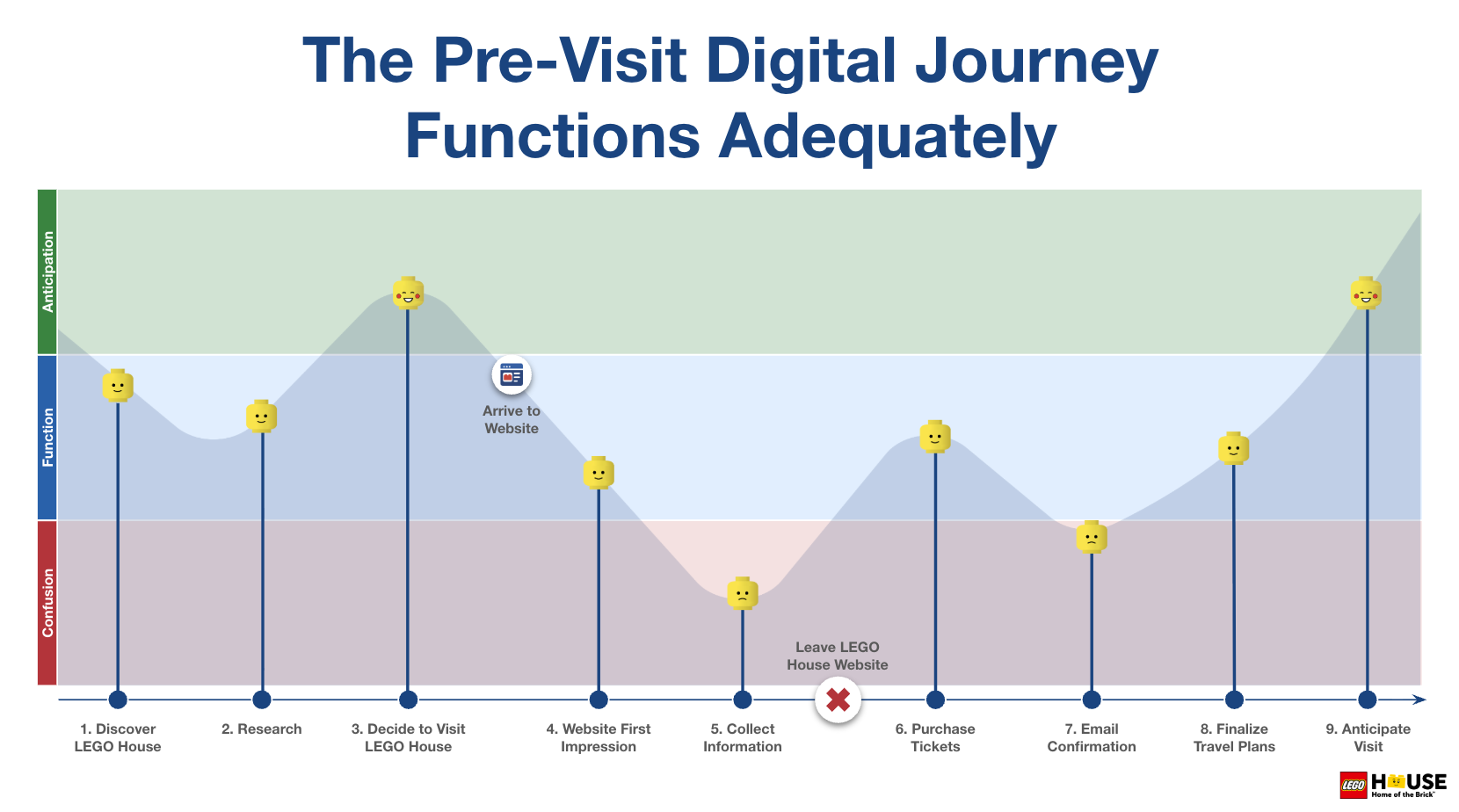
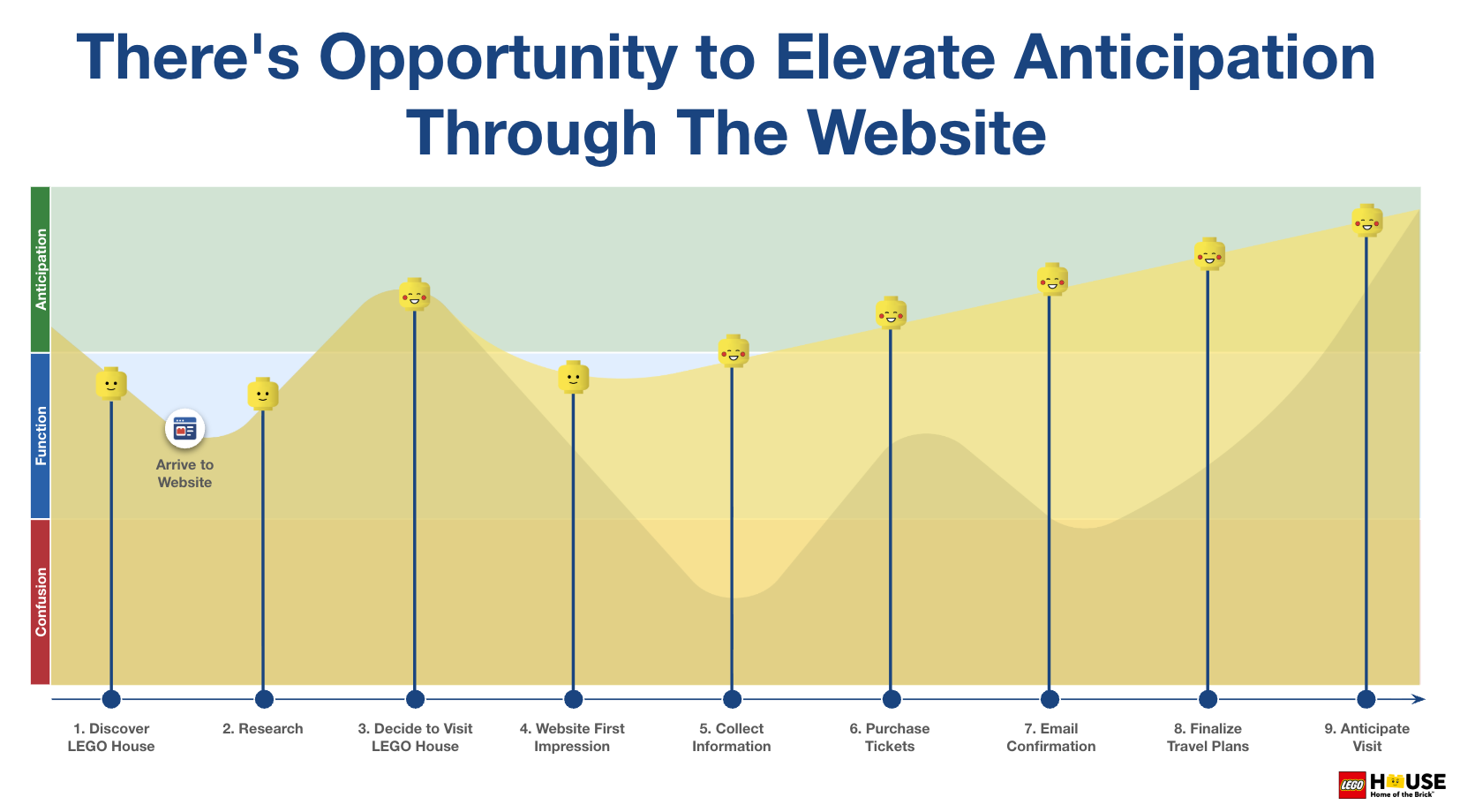
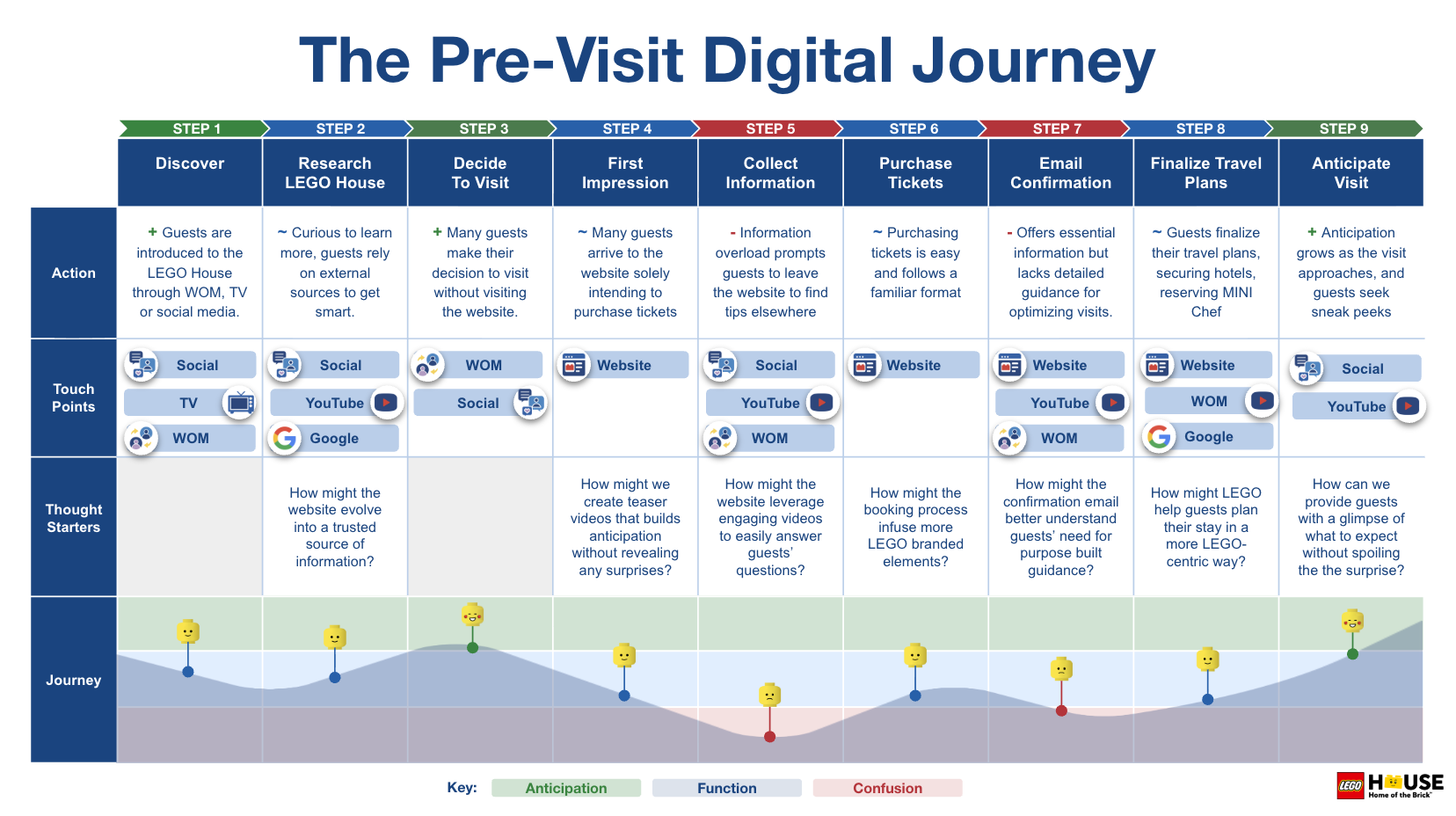
The pre-visit digital journey functions adequately. That was both the finding and the problem. Guests arrive at the site mostly intending to buy tickets, not to be inspired. The website does the transactional job fine but misses the opportunity to build anticipation, answer real questions, and extend the LEGO magic into the digital experience before anyone sets foot in Billund.
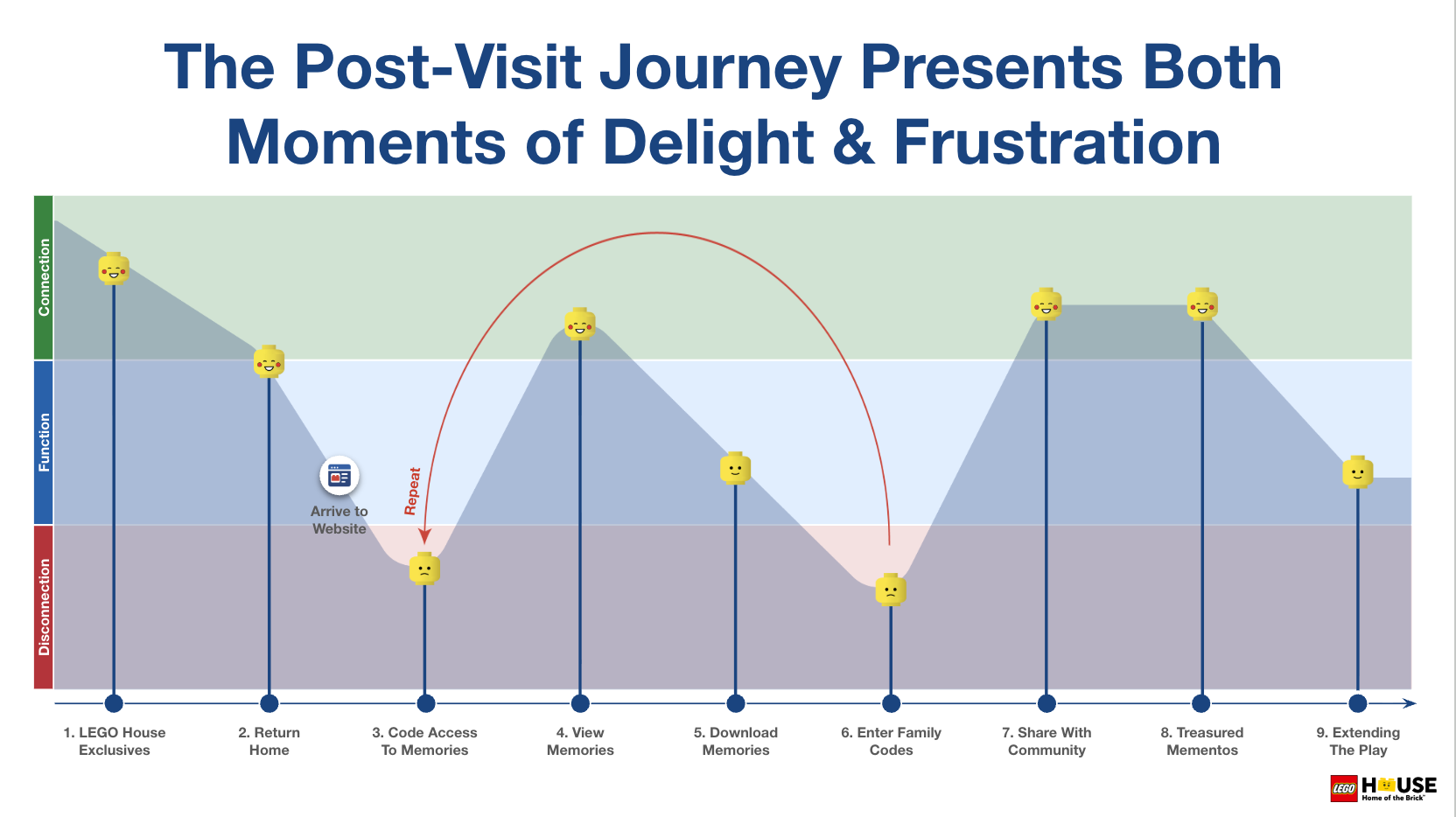
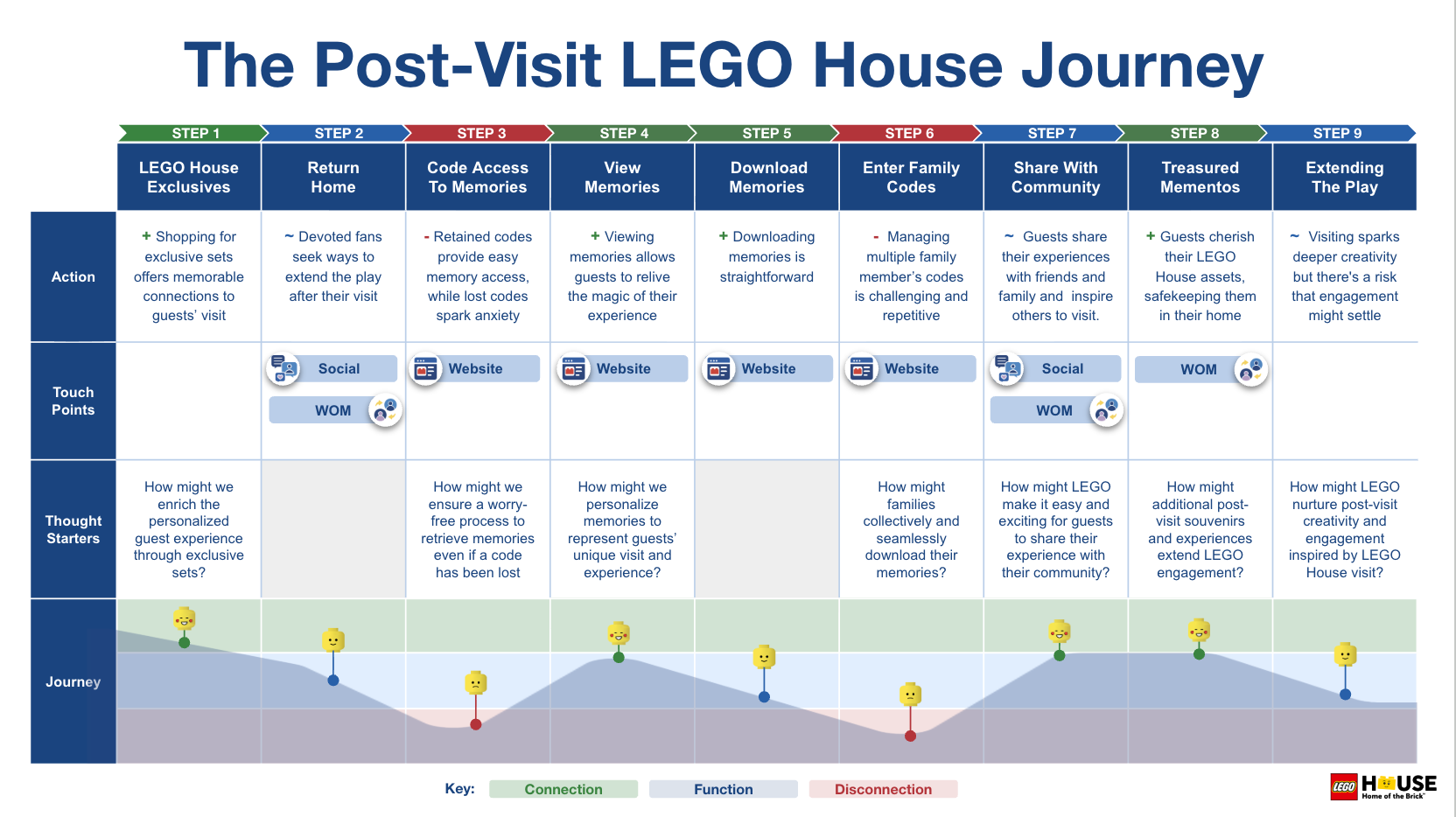
The post-visit journey presented both delight and frustration. Viewing and downloading memories was mostly positive. But managing multiple family member codes was repetitive and anxiety-inducing, and the 30-day access window meant many guests lost their memories entirely.
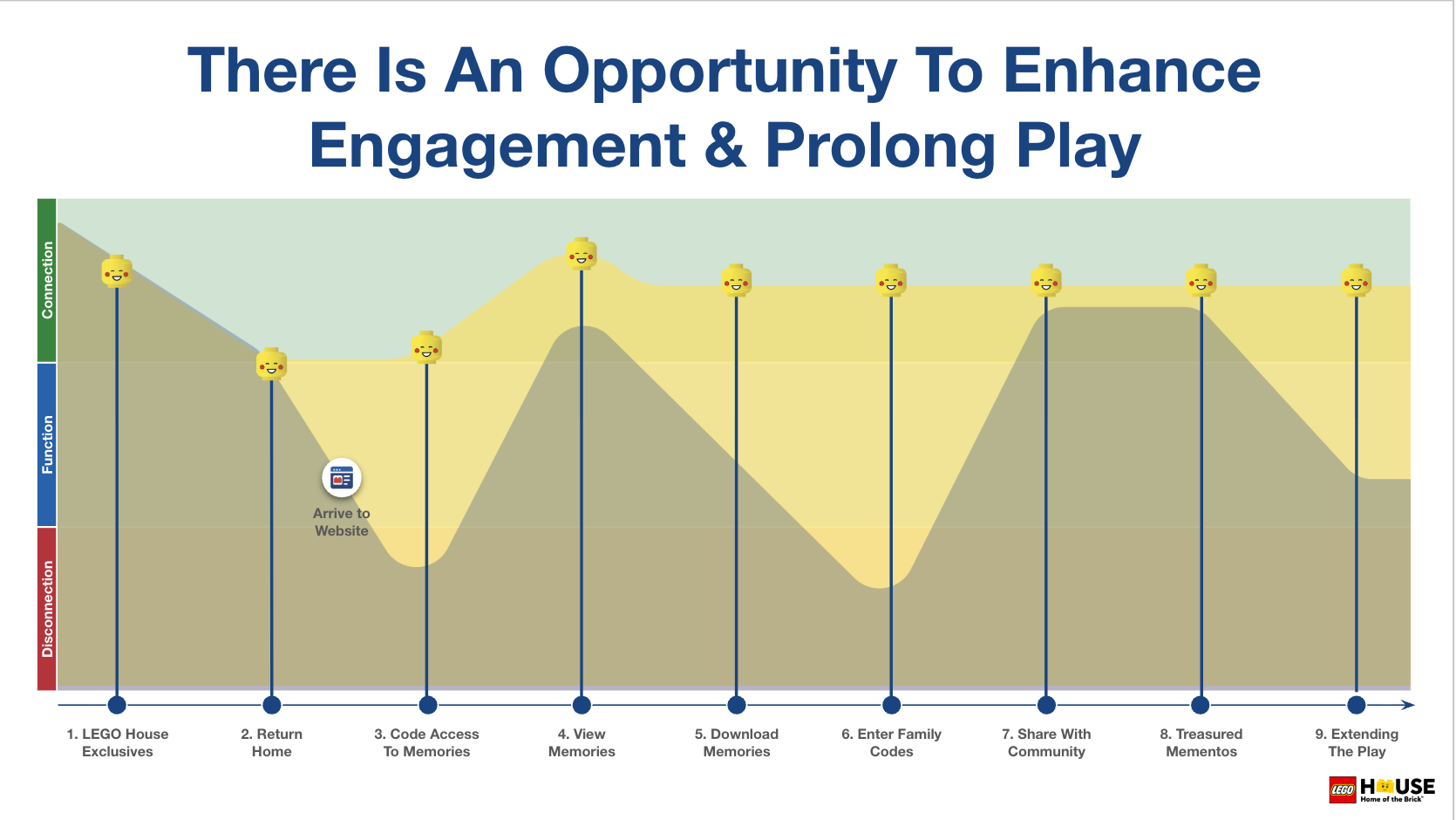
Three opportunity areas emerged across both journeys: information, moving from basic to immersive. Anticipation, moving from curiosity with restraint to trusted revelations. And personalization, moving from a generic experience to a tailored one.
The Work Session
We presented our findings to LEGO House in a working session, walking them through the heuristic evaluation, the journey maps, and the opportunity areas. Rather than a one-way readout, the session was designed for participation: ideation breakouts, group discussion, and collaborative exercises to start turning insights into design principles.
The four design categories that came out of it are: personalizing the experience for each guest, creating an easy and accessible experience, fostering anticipation and surprise, and creating a more playful and enduring experience.
Those became the foundation for LEGO House's five year digital roadmap.